Author Archives: plum

31 Days of Life in my Hawaii Day 13:: Culture, customs and traditions: Baby Luau

A few weekends ago, The Coach and I attended one of my favorite island-style events: a baby luau.

A dearly loved Hawaiian cultural tradition, a baby luau is a child’s first birthday party, but generally a much bigger deal than these types of events tend to be on the mainland. Imagine an event more on the scale of a wedding, with hundreds of guests and all the embellishments that go along with a momentous occasion.

The way a baby’s first birthday got to be such a major thing here has to do with the high rates of infant mortality in past centuries. For a child to survive his first year of life was by no means a given, hence it was deeply valued, and therefore an occasion for families to come together in gratitude and celebration.

Nowadays it’s still expected that you’ll do a big party for your baby’s first birthday, and that your family and friends will all chip in and help make it happen. The one we went to recently was at a beachside club, and included Hawaiian music; activities like an inflatable bounce house, face painting, and a photo booth; thematic decorations and favors, and of course, a delicious meal.

It’s called a luau because traditional Hawaiian foods are served: kalua pig, lomilomi salmon, chicken long rice, poi, haupia. If you like Hawaiian food — as I do — you’ll be in heaven. It’s no time to stick to your diet!

After everyone’s eaten, the baby’s family will say a few word of thanks to the guests, we’ll all sing Happy Birthday, and have some birthday cake. The festivities may well continue for several hours, even if the guest of honor needs to go down for a nap.
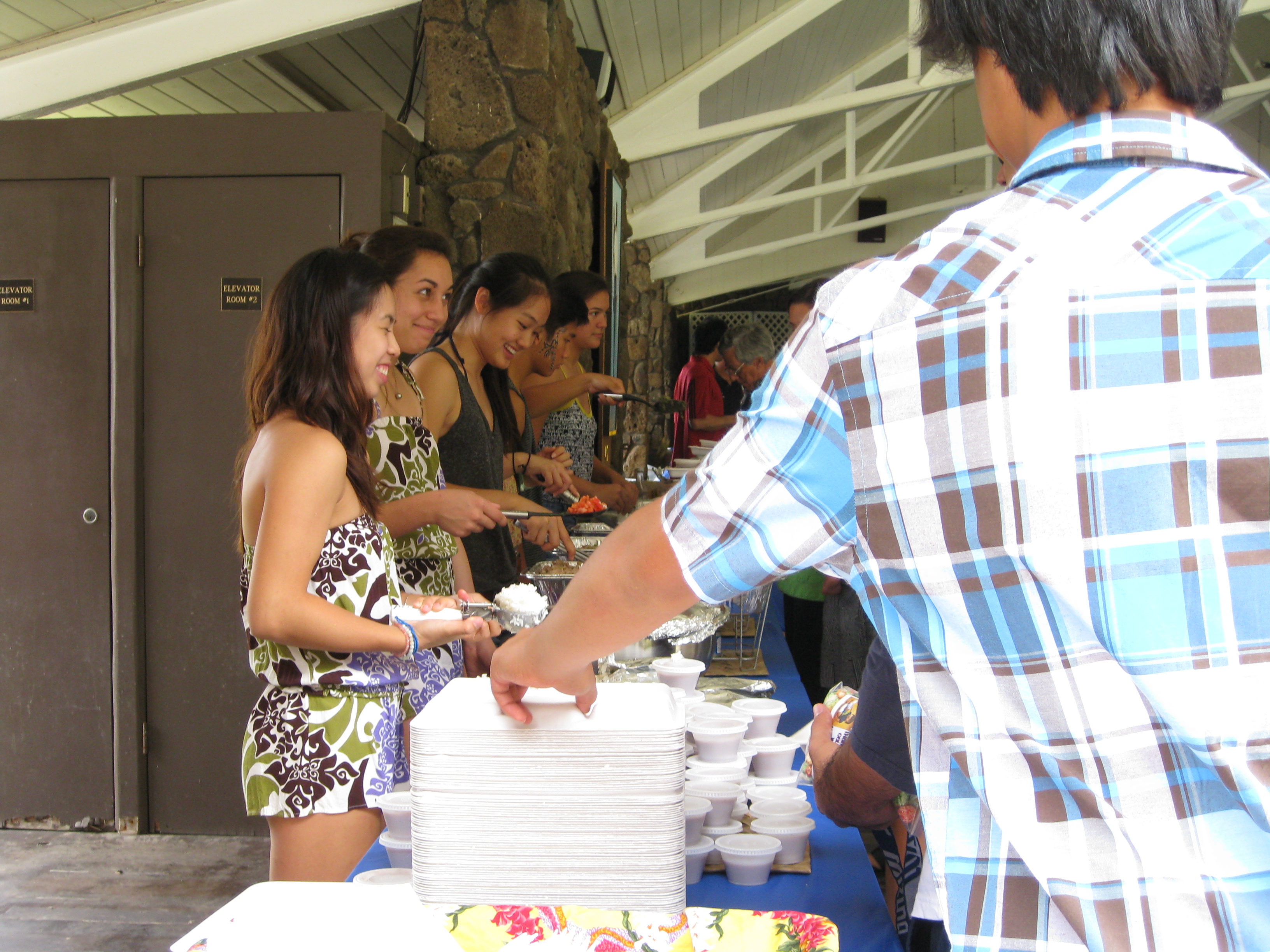
Young cousins and friends help serve the food
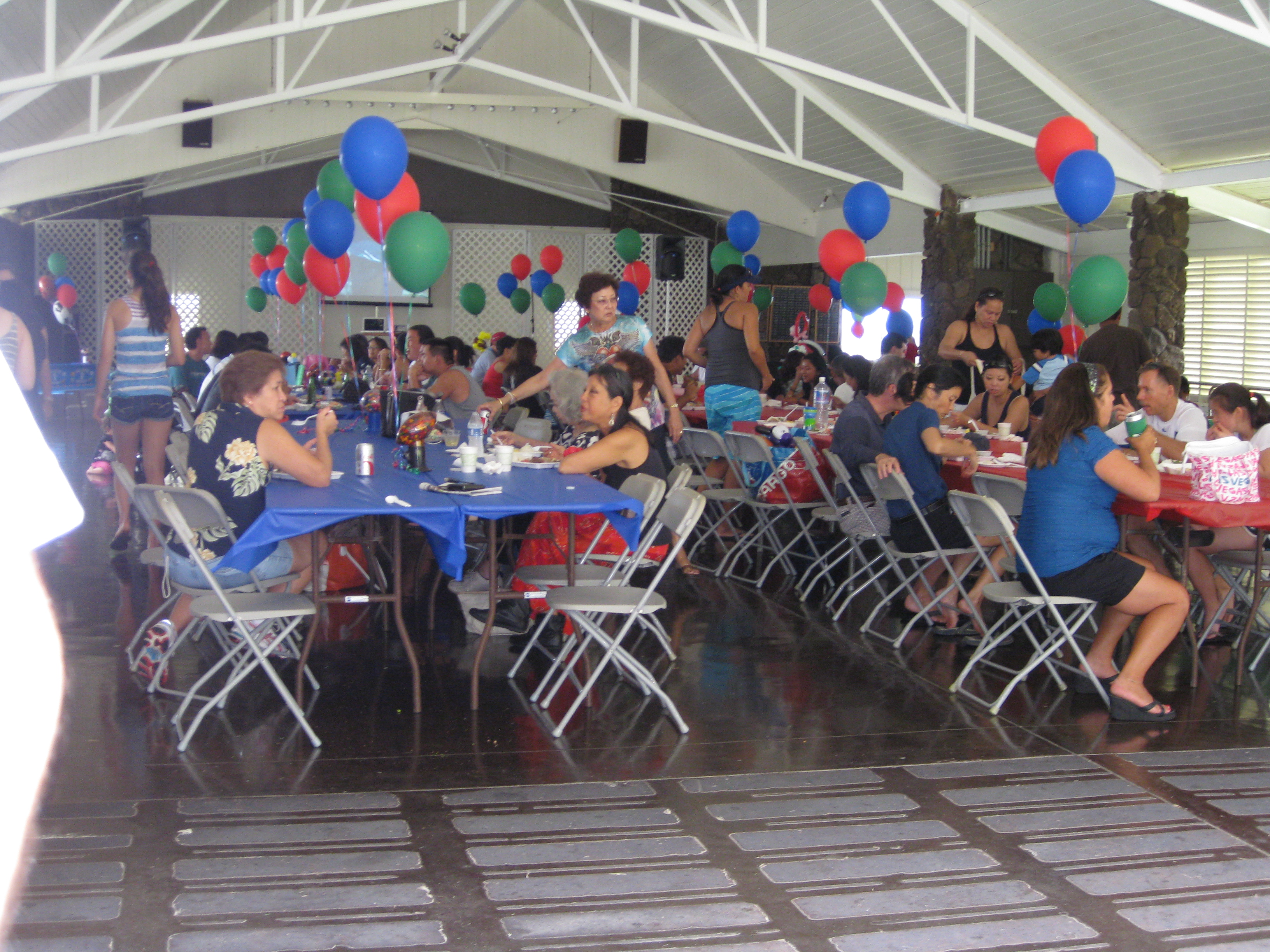
Guests gather for a yummy lunch
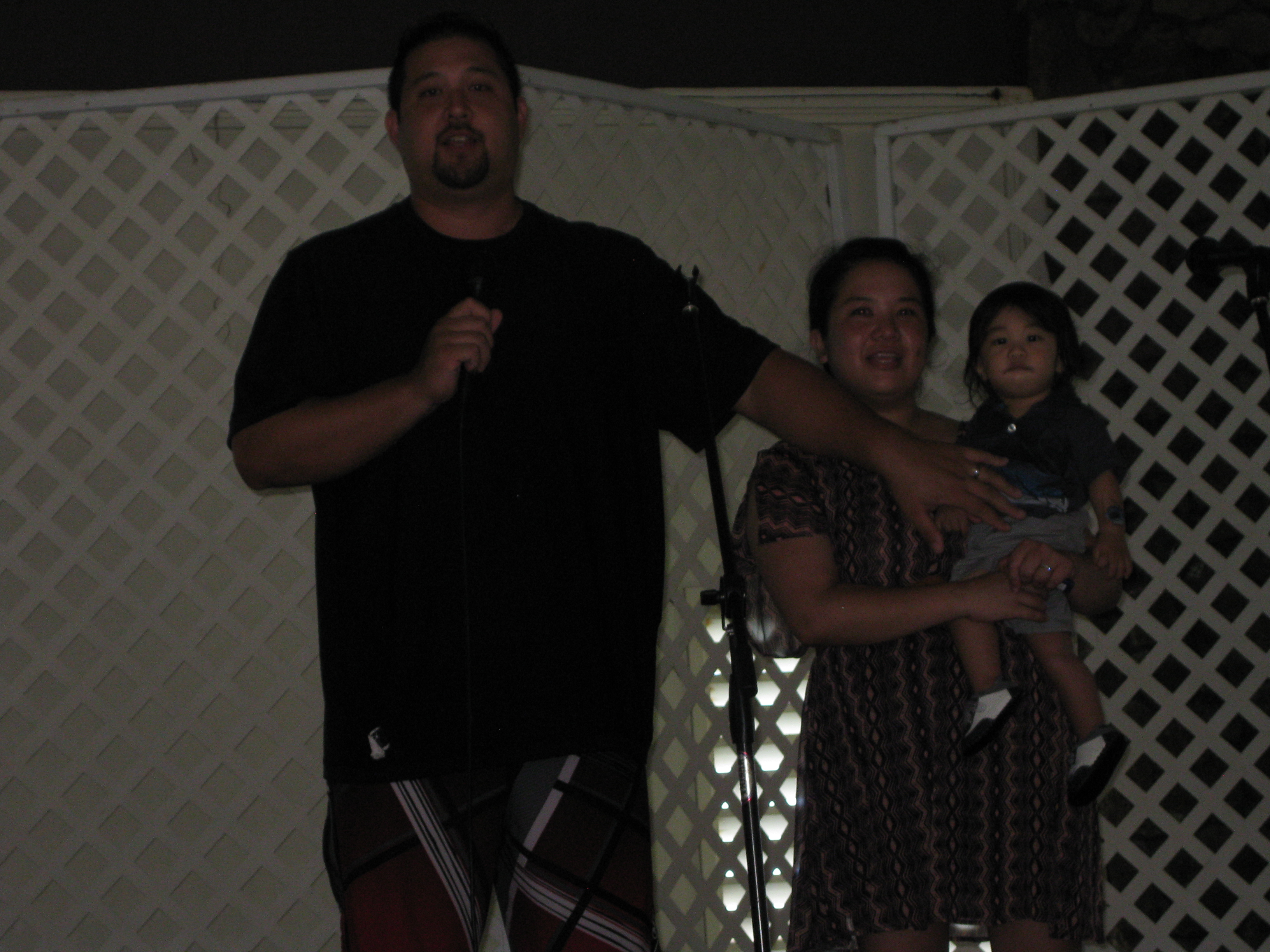
The birthday boy and his parents extend their aloha and thanks to their families

This is the thirteenth post in my series, 31 Days of Life in my Hawaii. Click here to get the links to the other posts in the series.

31 Days of Life in my Hawaii Day 12:: Critters: Mongoose

photo credit: ourdems.org

First of all, I’d like to clarify that the plural of mongoose is not mongeese.

It’s mongooses.

Just thought I ought to get that out of the way.

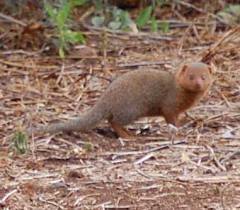
Mongooses were introduced to Hawaii late in the nineteenth century, with the intention of having them help control the rat population, which had gotten out of hand what with all the trans-Pacific ship traffic passing through the islands.

There was only one problem: rats are nocturnal, and mongooses are diurnal. The mongooses were happy to do something about the rat problem, they just weren’t awake at the right time to do it.

Which in turn created another problem: the mongooses needed something to eat, and they have a special liking for eggs. So they turned to a diet of our native species, such as our various forest birds. These are — were — magnificently colored little avian species, highly prized in Hawaiian culture for their feathers. Thanks to the mongoose and other non-native predators, most of these beauties — and several other varieties of Hawaiian bird life — are now, alas, endangered or extinct.

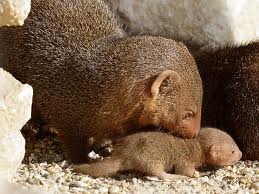
Still, in spite of the destruction they have caused, I have a bit of a fondness for the mongoose. I guess it’s because they’re … cute. There are tons of them on the campus of the school where The Coach works; they live in the shrubbery and you often see them making a dash across the road on their way home. Usually it’s just one hurrying to make it across without getting run over by your car, but often you’ll see a mama followed by a couple babies.

photo credit: redbubble.com

It’s hard to see a scene like that and not say, “Aww.” Although the birds whose eggs are getting eaten probably don’t think so.

This is the twelfth post in my series, 31 Days of Life in my Hawaii. Click here to get the links to the other posts in the series.
31 Days of Life in my Hawaii Day 11:: Flowers in my yard: Red ginger

Whew — I was more than a little long-winded yesterday, wasn’t I?

Sorry about that; I’m going to give us both a little break today and just let the pictures do (most of) the talking.

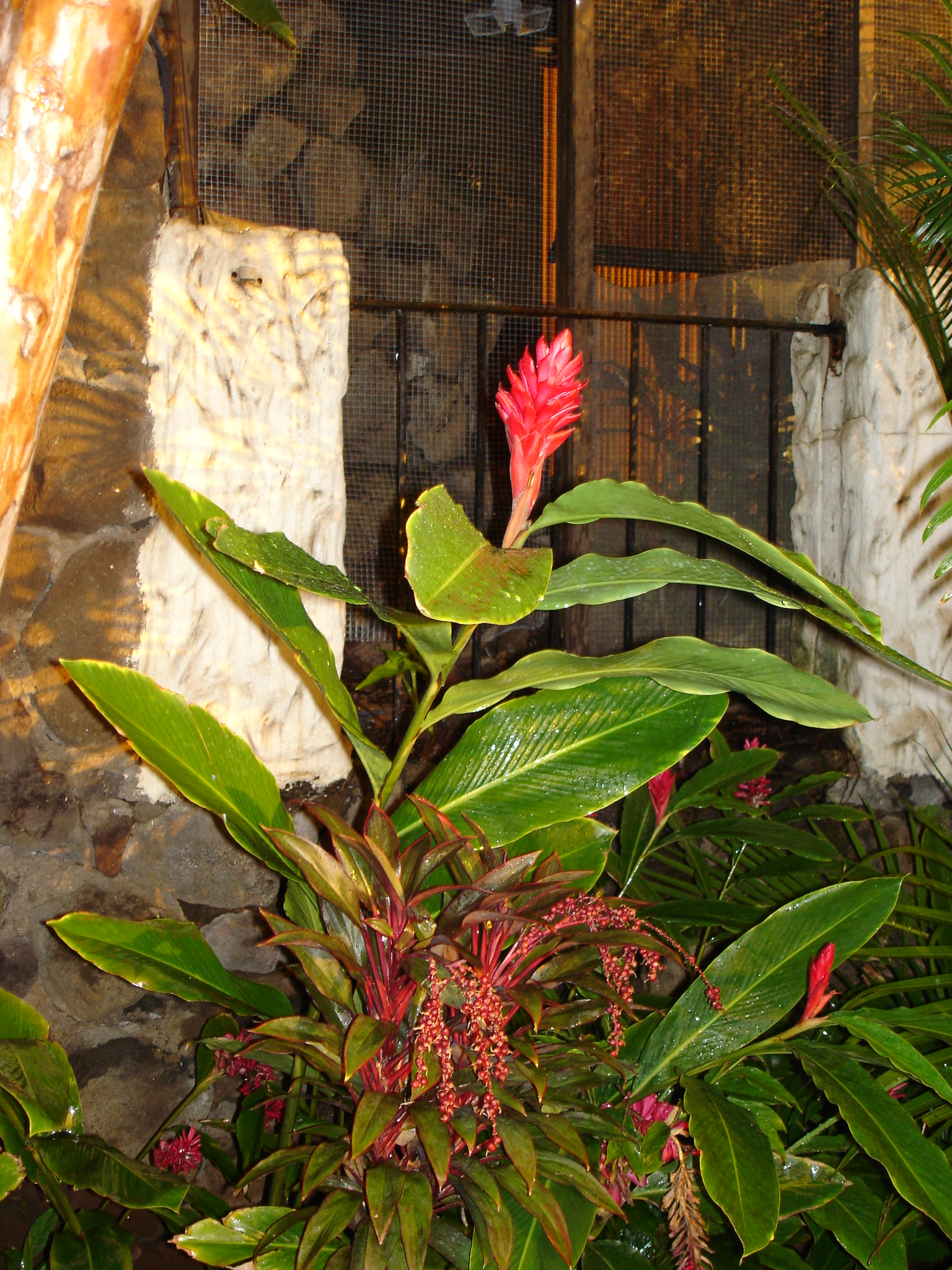
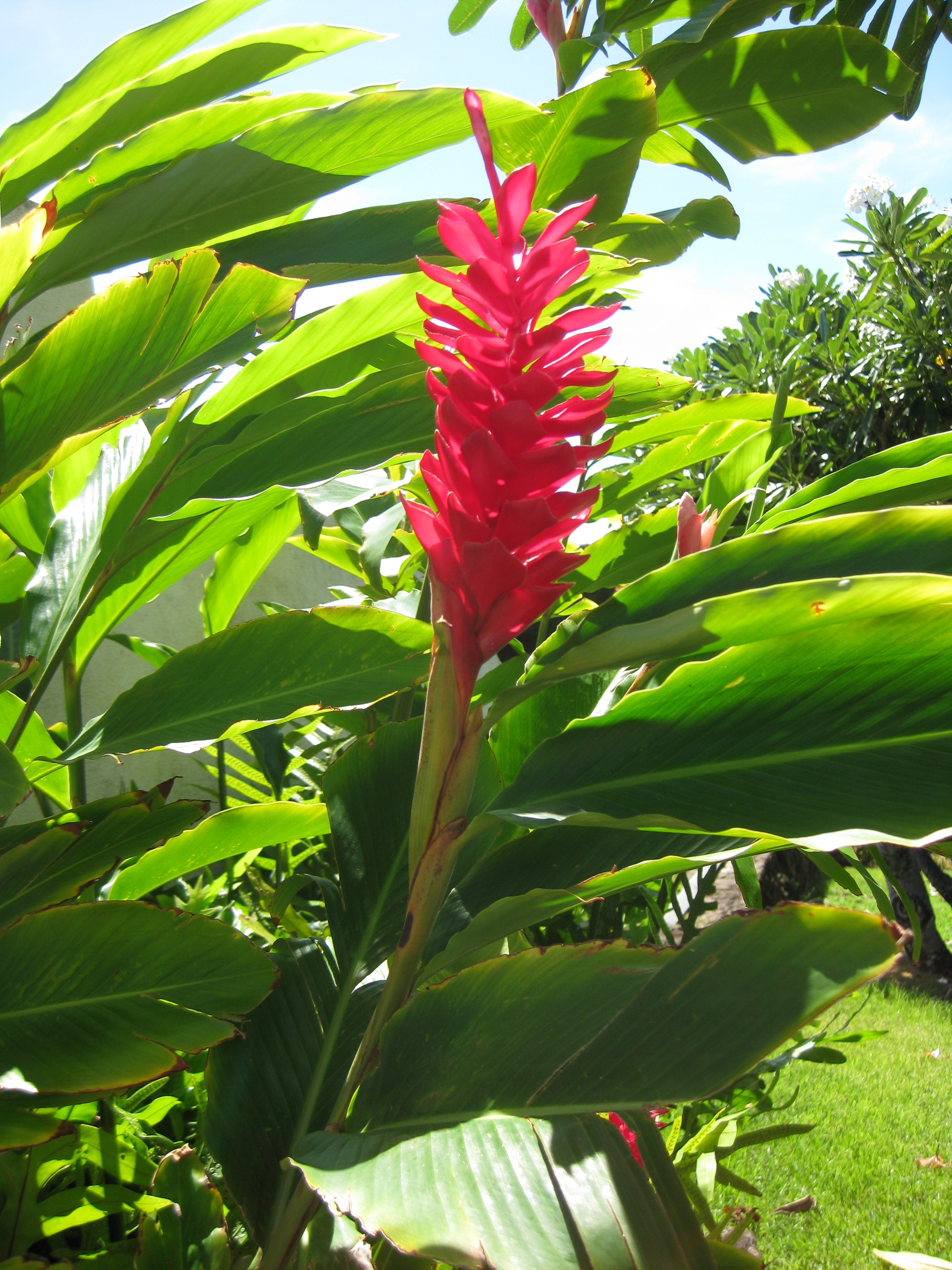
We have quite a bit of red ginger growing in our yard, both front and back. Lots of us islanders include this plant in our landscaping, but it also grows wild in our rainforests, so chances are good you will see it when hiking in the mountains.

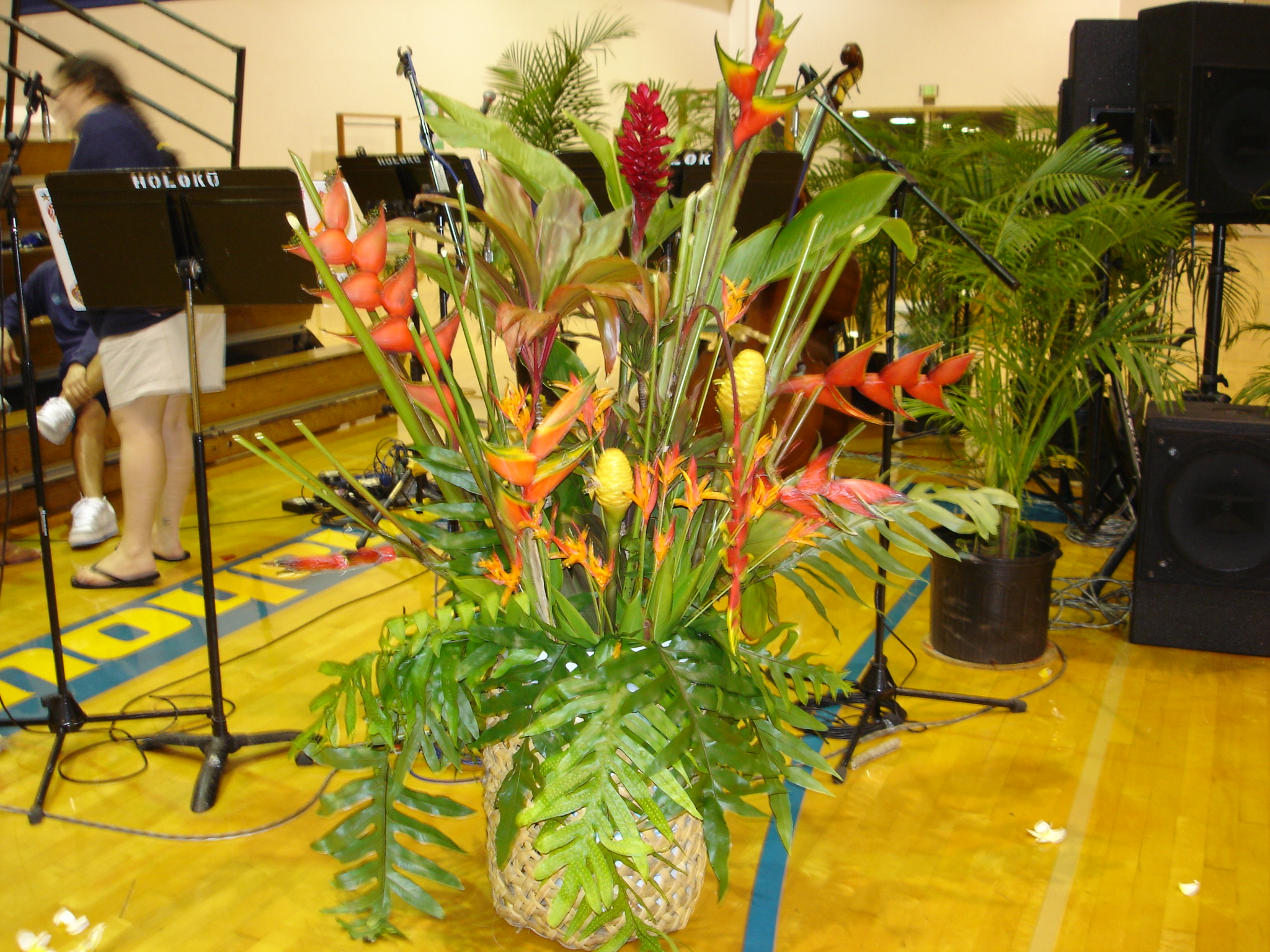
Just one stalk of red ginger in the center of the arrangement makes it “pop”

The color certainly adds a nice brightness to your outdoors, and the sturdy stalks, when brought indoors and added to an arrangement, will do the same for your home. Or wherever you want to add a decorative touch, which is why you often see it used for stage decorations.

And, this flower is probably the most common one you’ll see in cemeteries. So you’ll see buckets of red ginger for sale at most florists, making it easy for customers to pick up a bunch or two on their way to decorating their loved ones’ grave sites. For many people in the islands this is a weekly practice.

This is the eleventh post in my series, 31 Days of Life in my Hawaii. Click here to get the links to the other posts in the series.

31 Days of Life in my Hawaii Day 10:: Food: Strawberry Guava

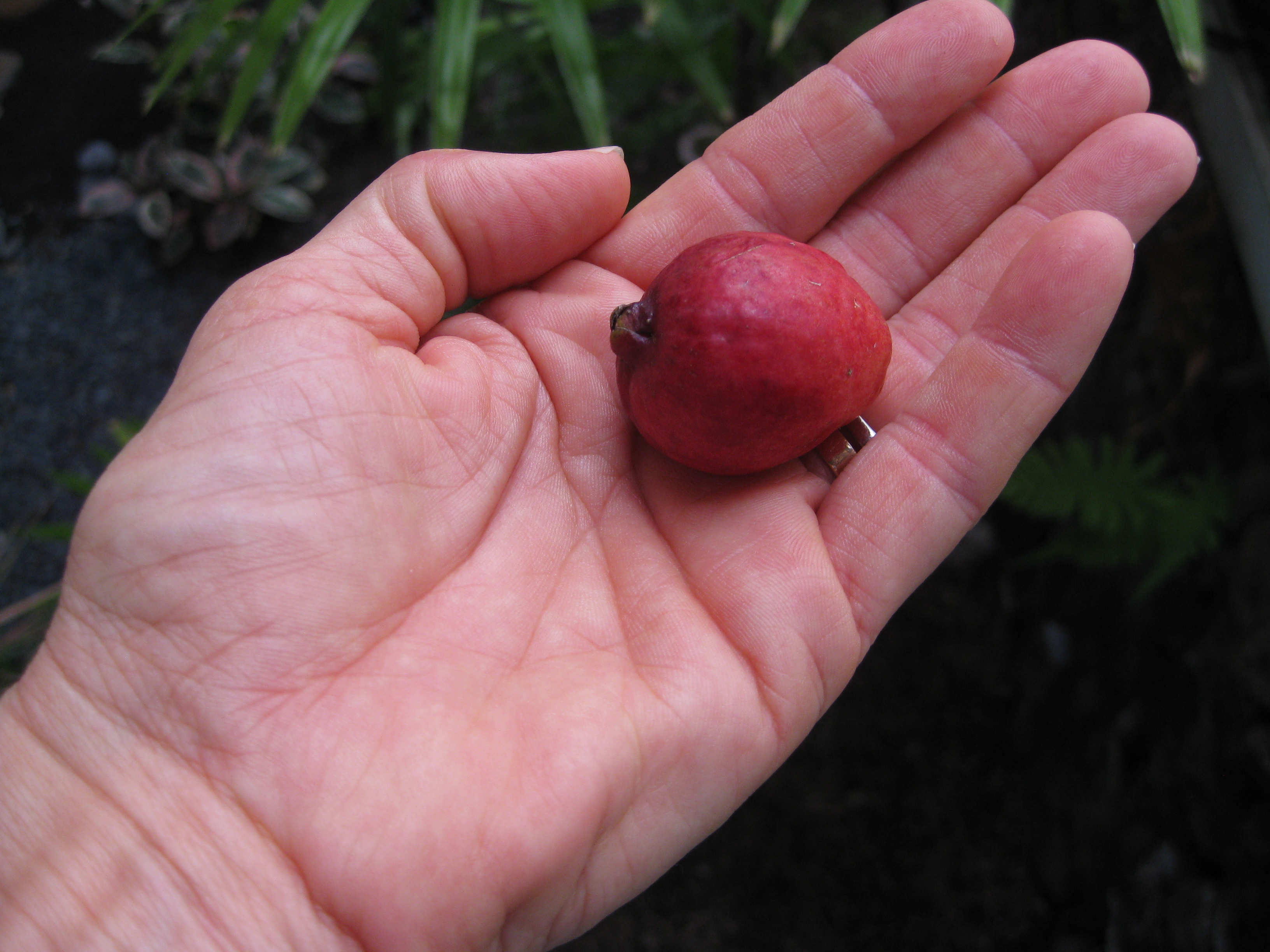
Since this series is about life in my Hawaii, I might be including elements of island life that are kind of a big deal for me, but to which another islander might say, “Huh?”  One such thing in the food category is the strawberry guava, known here as waiawī.

This little fruit often gets a bum rap because it isn’t actually native to Hawaii, and in fact is considered an invasive species where it grows wild up in the rainforests.

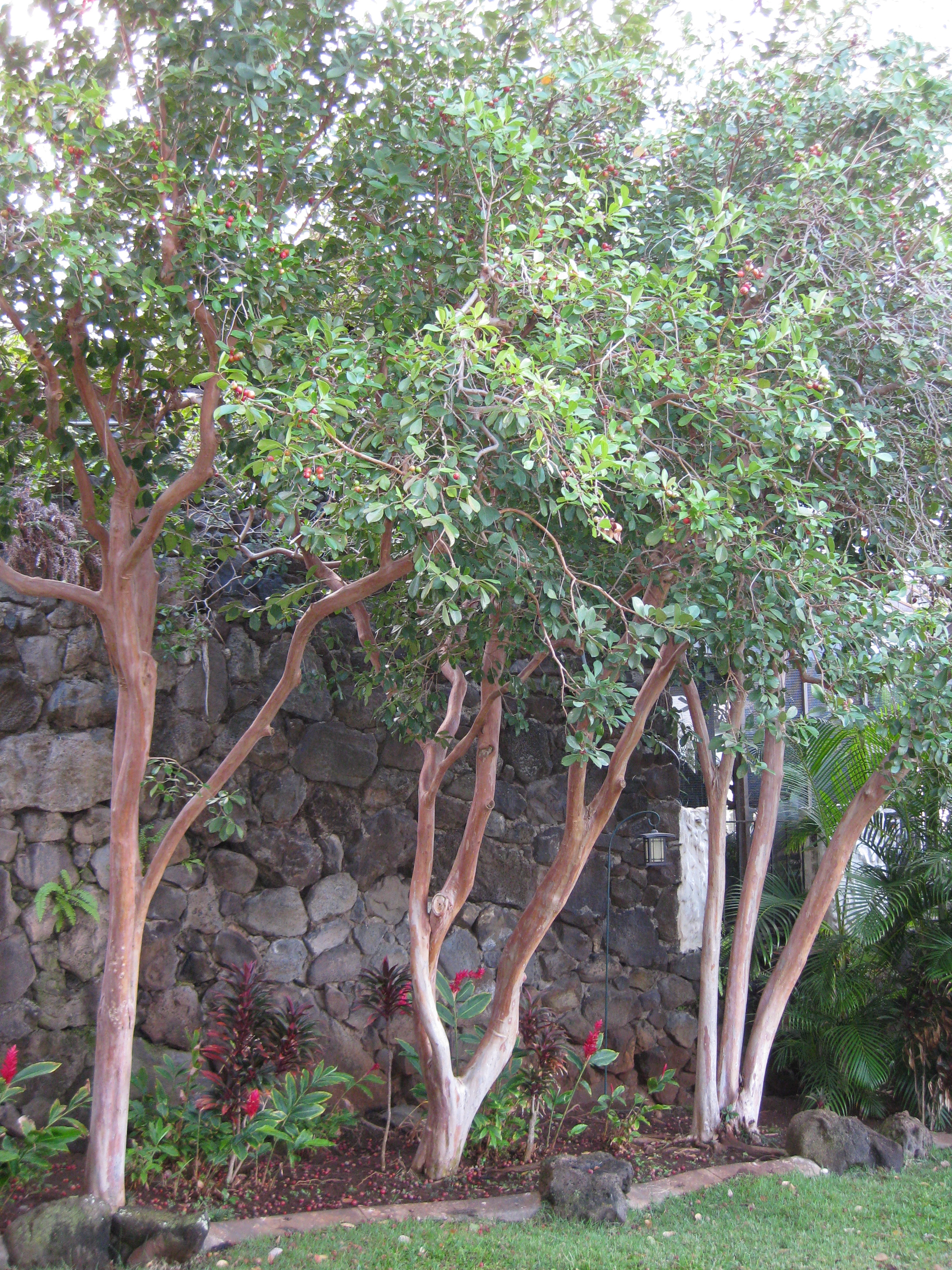
We have four trees in our yard, one in the front and three in the back, and they are pretty productive most years. This year we had a bit of a bumper crop, so that meant a couple of things for The Coach and me: raking, and jelly.

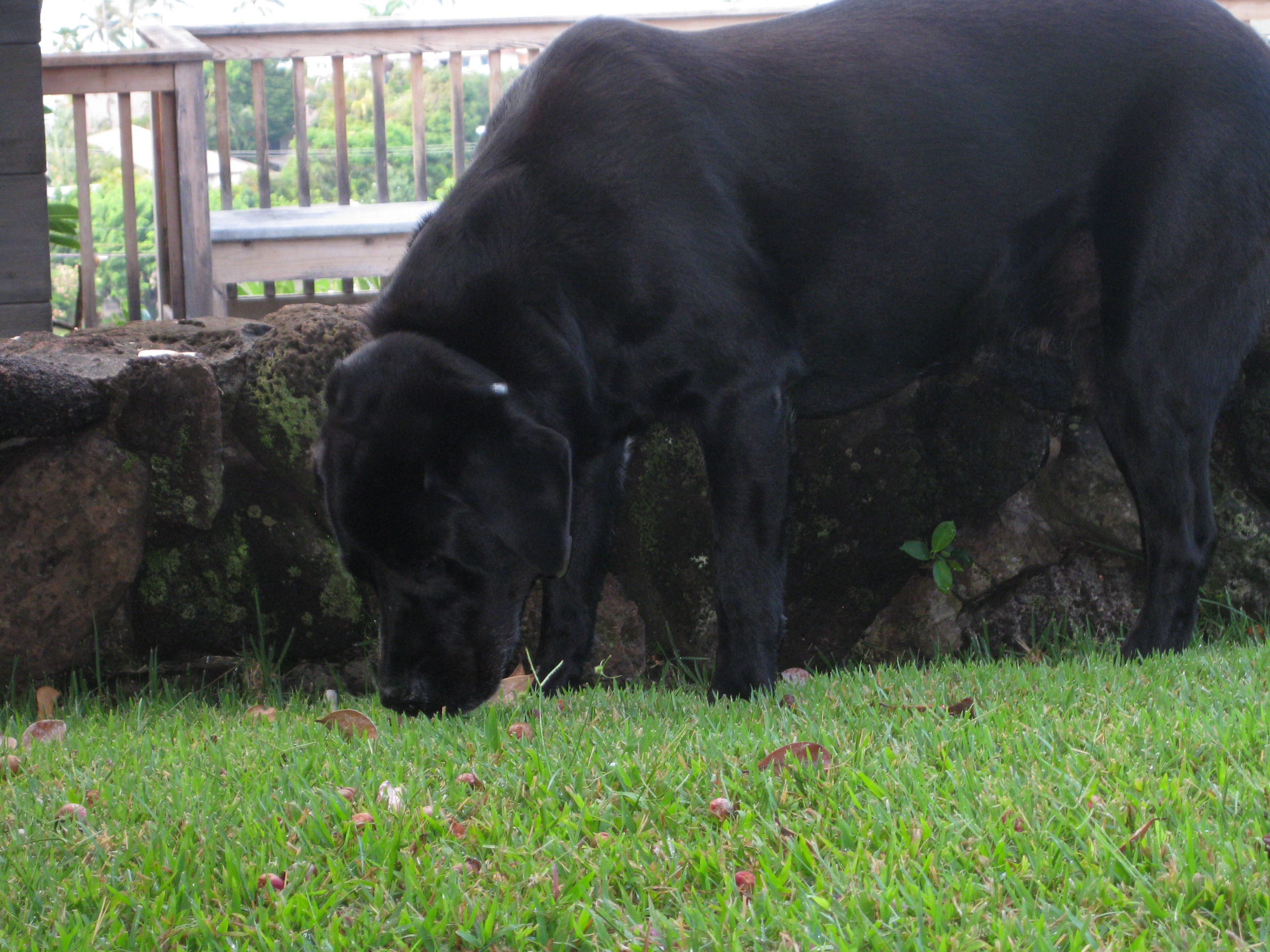
Nice to have a “helper” when you’re raking

Our backyard trees. If you click on the image you’ll see there is a lot of fruit on the trees to be picked, and even more on the ground to be raked.

When we first moved into this house, we watched the trees blossom, then the little green fruits appear, then ripen, then finally fall to the ground. So every day we’d rake them up by the dozens of pounds and toss them; this went on for several years before it occurred to us that maybe we should actually do something with all that fruitiness. Thus began our adventures in strawberry guava jelly.

My mother-in-law had some experience in that department, but the first time we attempted to make jelly, she was away on a trip, so we had to kind of find our way on our own. The Coach’s aunt, her sister, was some help, but mostly we learned our jelly-making through trial and error.

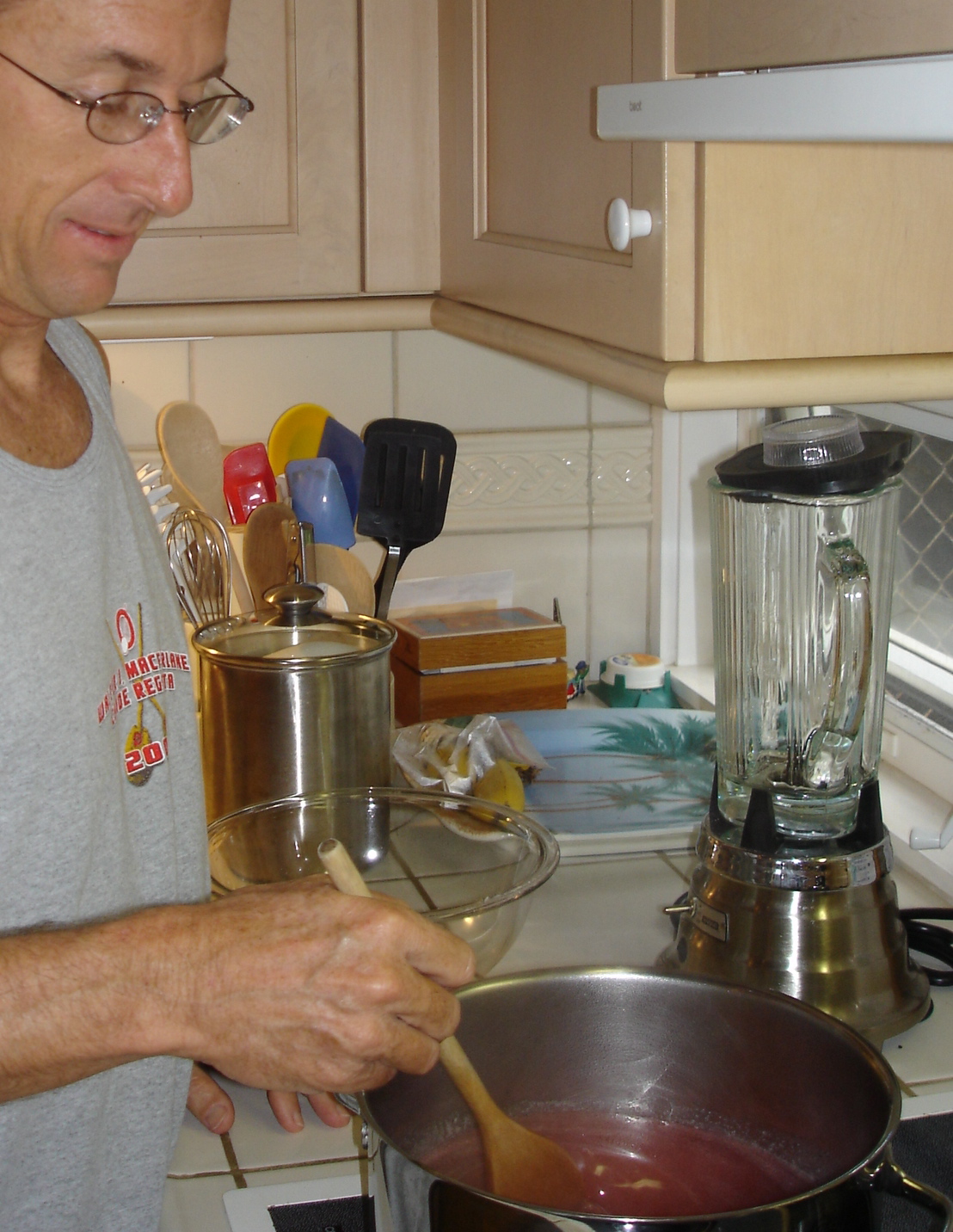
The process goes something like this: you need five pounds of fruit to make a case of jelly. So first you pick the fruit — five pounds comes out to about a gallon container of guavas — then you make juice. The juice making involves mashing and boiling the guavas with some water and lemon juice, then straining it through fabric bags, so that you end up with about 7 cups of juice.

When the juice is cooked with sugar and pectin, it’s a beautiful deep pink

Now you’re ready to make the jelly, half a case at a time. This requires two boxes of pectin per case, to help it set up, and lots and lots of sugar. I’m not going to tell you how much, because it’s enough to send you into a diabetic coma just thinking about it. Anyway. You boil the juice with the pectin, then add the sugar and bring it back to a boil, which you let it do for about two minutes.

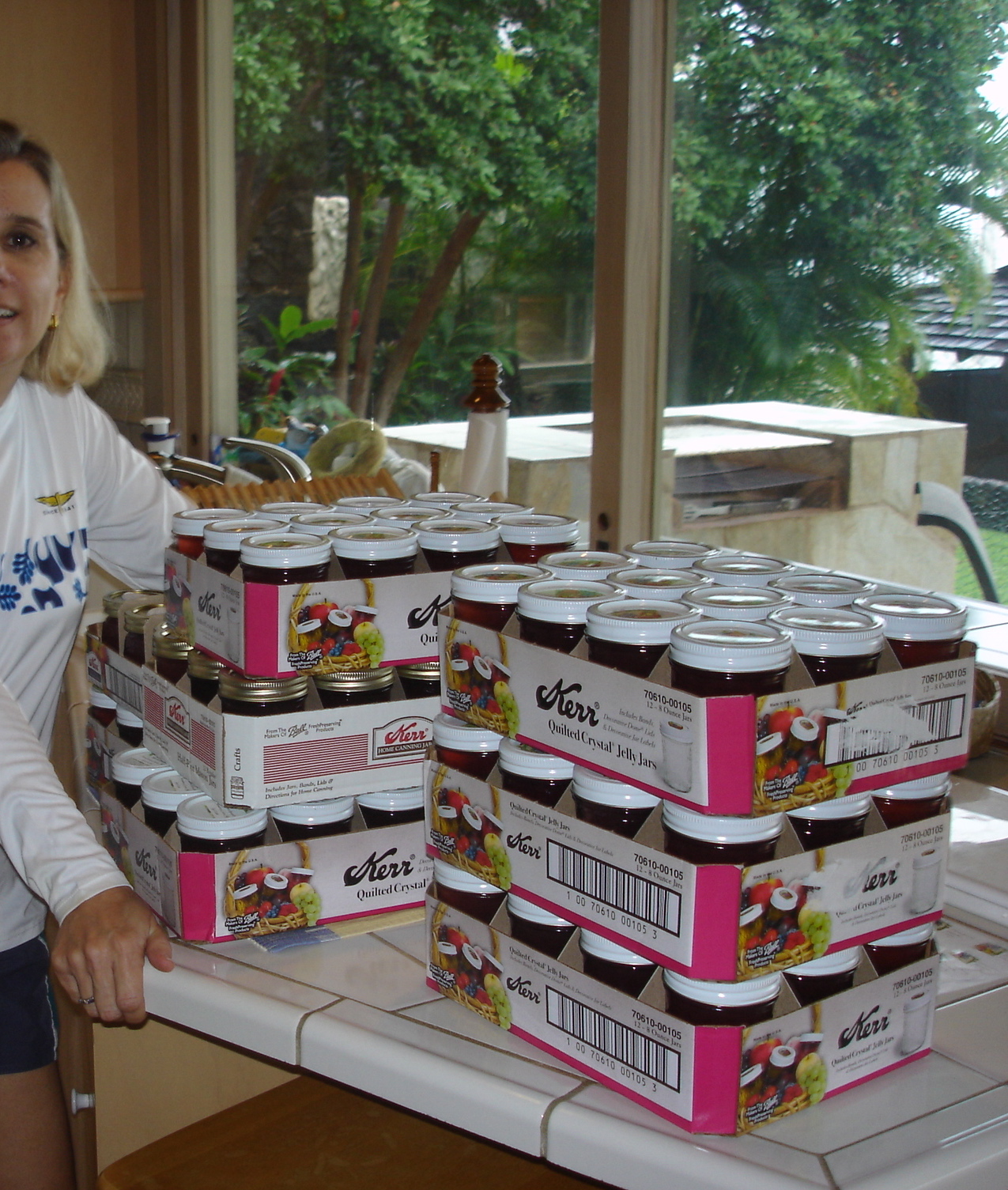
Then you pour it into jars and that’s about it. The first year we did this we made two or three cases, the next year, maybe five. Which seemed like a lot, until last year we set a record: twelve cases.

Friends have suggested we should sell our jelly at farmers markets and such, but we just don’t want to work that hard. So mostly what we do is give it away for Christmas gifts and as thank-yous. And, of course, enjoy it on a peanut butter and jelly sandwich.

The year we made eight cases

This is the tenth post in my series, 31 Days of Life in my Hawaii. Click here to get the links to the other posts in the series.
31 Days of Life in my Hawaii Day 9:: Music and Dance: May Day

Every year on May 1st, we have May Day, which is Lei Day in Hawaii.

(There’s even a song we sing, helpfully titled “May Day is Lei Day in Hawaii.” )

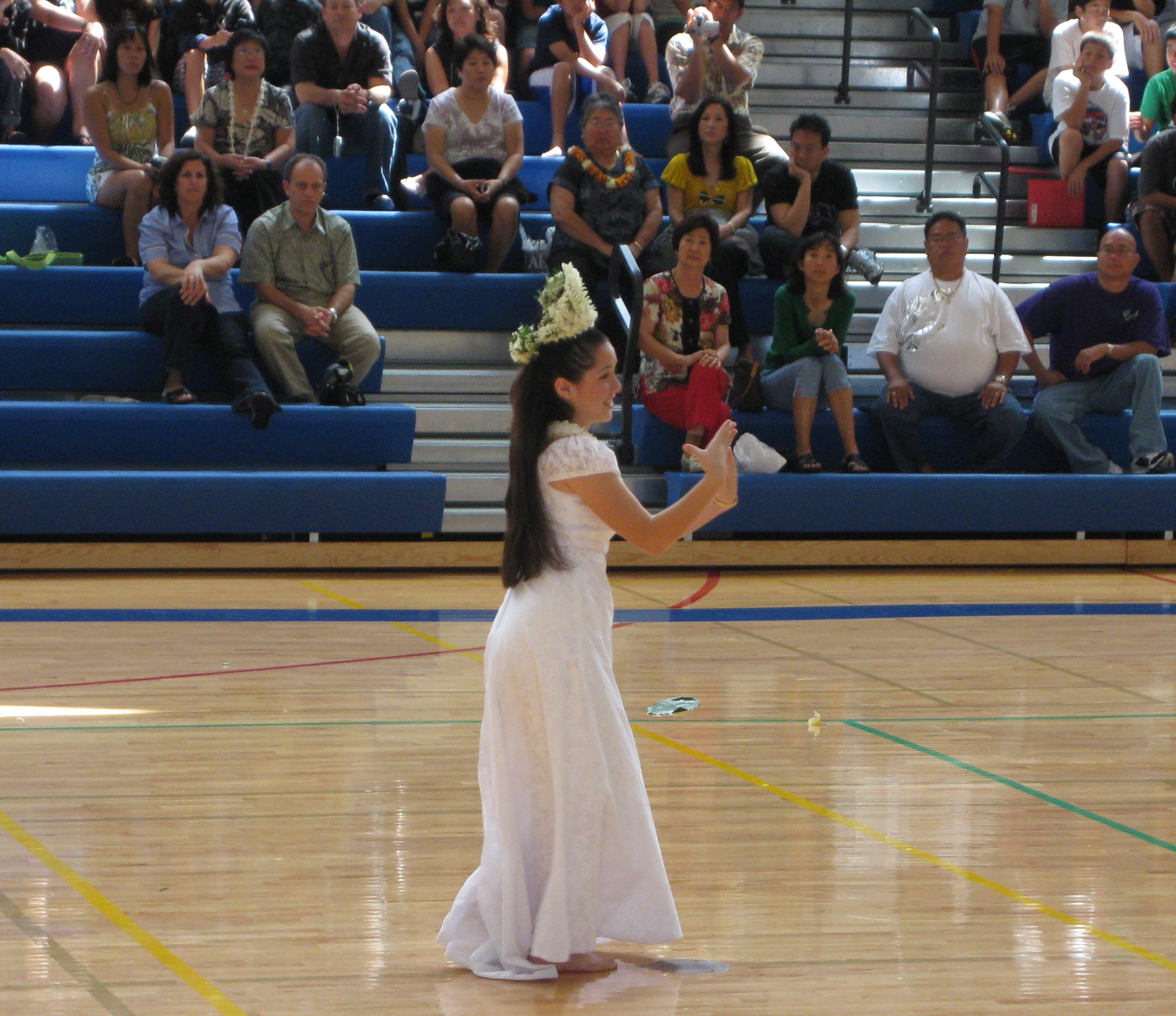
Along with being about the giving and receiving of leis, Lei Day is a celebration of Hawaiian culture. A celebration which would be incomplete without Hawaiian music and hula. On Lei Day this takes the form, in most island schools, of hula pageants.

Being dancers, my daughter and I grew up loving and looking forward to participating in Lei Day  pageants, starting in kindergarten and going all the way up through senior year in high school.

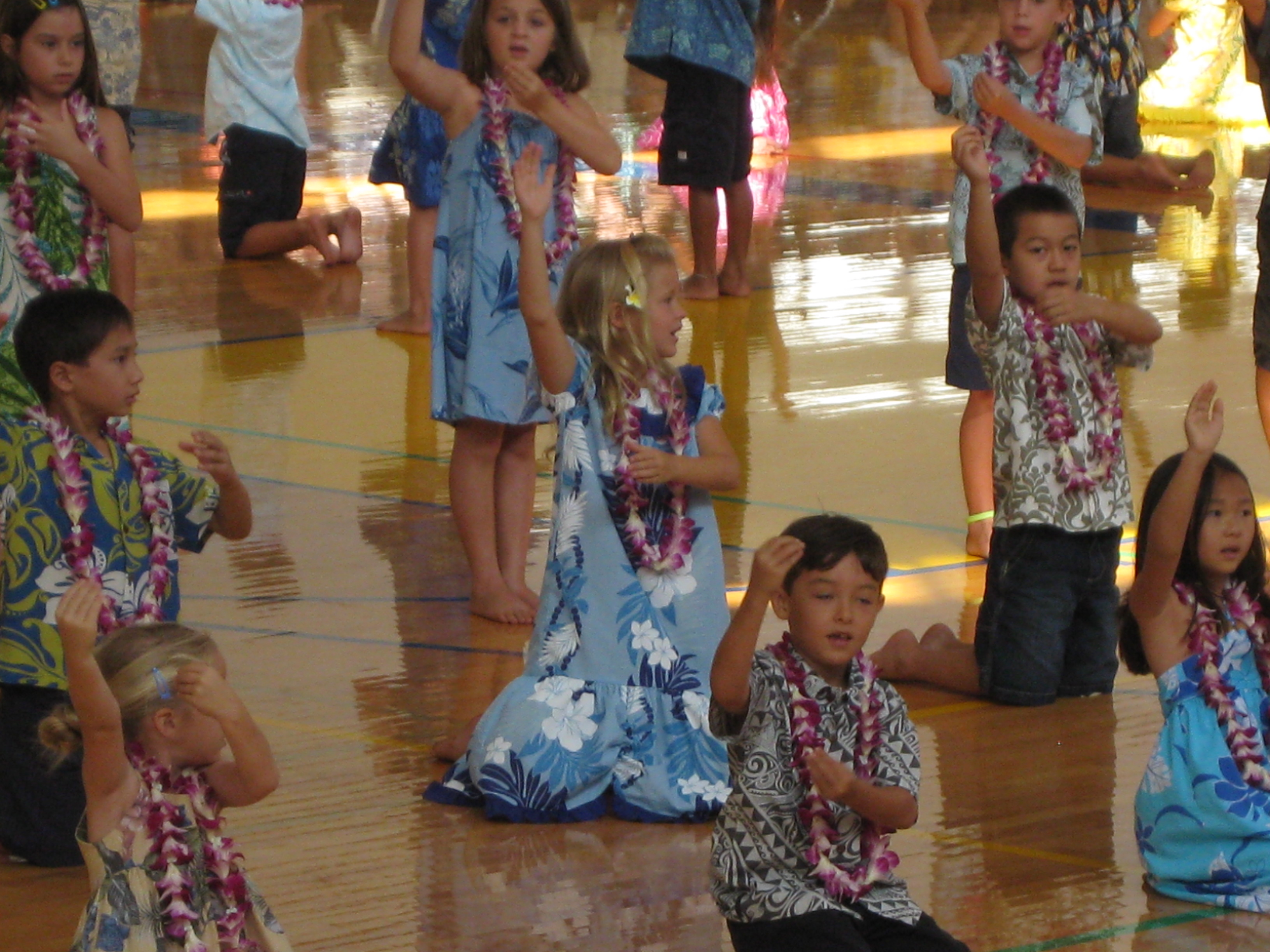
I love to watch the little ones

In elementary school, all the students participate. Each grade level learns and performs — either in the gym or out on the playing field — one hula, so you have a nice little program with several numbers. And there will be a “royal court,” made up of princesses (eight of them, representing each of the major islands) and a king and queen.

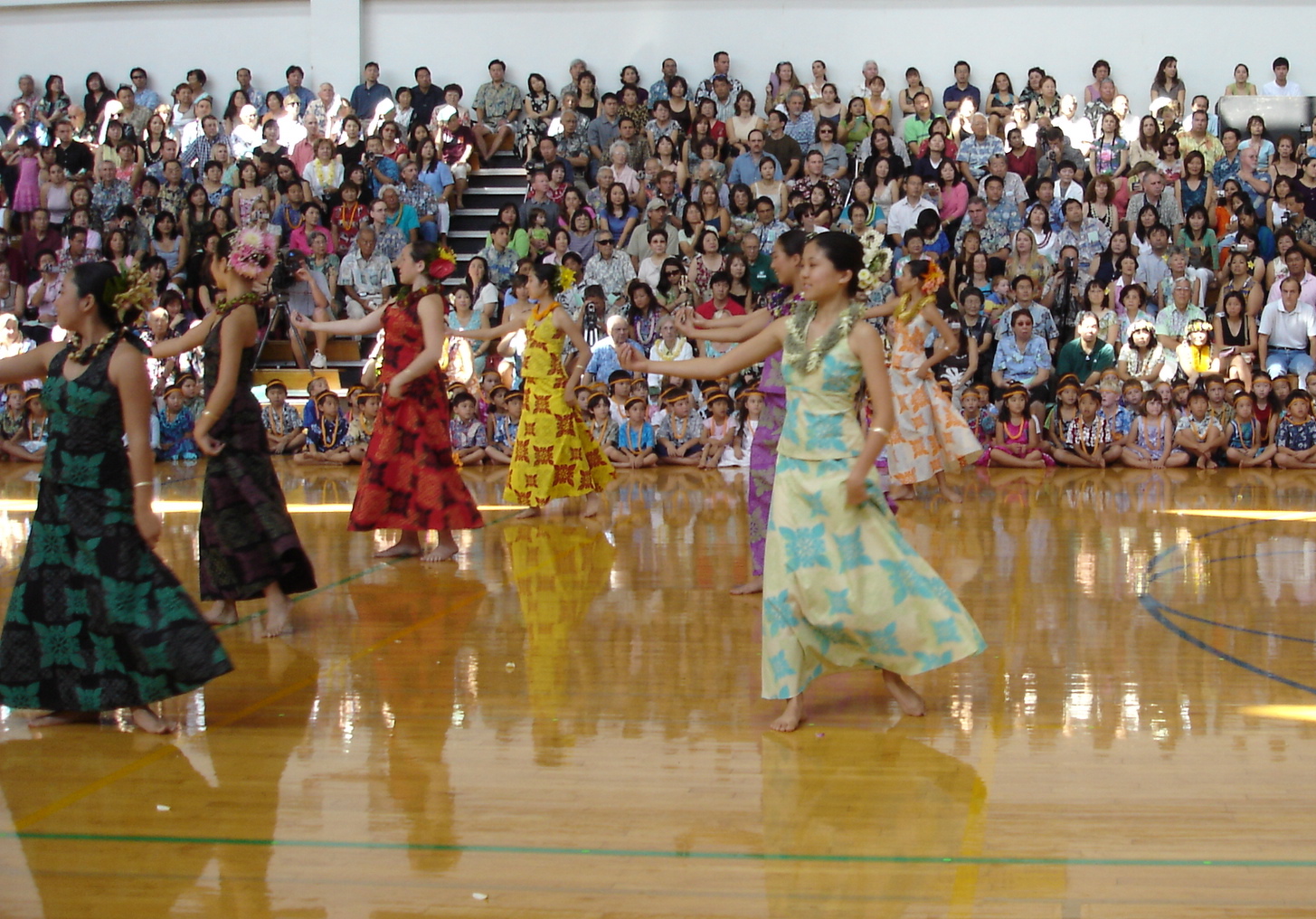
Princesses in the middle school pageant

In middle school and high school, the royal court part stays the same, but the student dancers have to audition to be a part of the pageant. And it gets a little more elaborate, not to mention colorful, with more emphasis on costuming and decorations, and maybe a specific theme for the songs and dances that are included in the program.

The Queen always dances a solo

Aside from it being just a lot of fun to wear all those fragrant flowers and get up and dance in front of a whole bunch of your family and friends, a Lei Day pageant is a great way to pass on the culture to the next generation. My kids are long since out of school, but come May 1st, you can bet I’ll be at the Lei Day program!

This is the ninth post in my series, 31 Days of Life in my Hawaii. Click here to get the links to the other posts in the series.
31 Days of Life in my Hawaii Day 8:: Beach and ocean: Hanging out

So since today is sort of, but not really a holiday, what might we be doing today?

Many opportunities present themselves, but going to the beach will always top the list.

And there’s a potentially endless list of activities that one can engage in on and near our island beaches: fishing, tidepooling, surfing, body surfing, body boarding, snorkeling — I’ll just stop there, because, as I said: potentially endless.

One of the things I like to do most at the beach is … just hang out. I guess I don’t feel like I need a specific reason — one of the things from the above list — that is my purpose for packing up a bunch of gear, heading out to the beach, and then doing something when I get there.

Maybe it’s because, when I was a kid, the carpool moms would pick us up after school, drive us to the beach, drop us off and come back for us a few hours later. And there we mostly just, you know, hung out. I’m not kidding. Of course nobody does that anymore, just leave their children alone at the beach without adult supervision.

In middle school and high school, we rode our bikes or the bus to the beach, or caught a ride with a pal who had a license and wheels. The Coach tells about how when he first got his license, all his buddies hit him up for rides to the beach; they paid him back by giving him gas money and buying him Dunkin’ Donuts on the way home. So that worked out good for all concerned.

And then when you get to be a grown-up, going to the beach to just hang out is a great way to decompress on your day off. Just sitting there, watching the waves, going for a dip when you get too warm, maybe having a picnic lunch — best stress reliever there is.

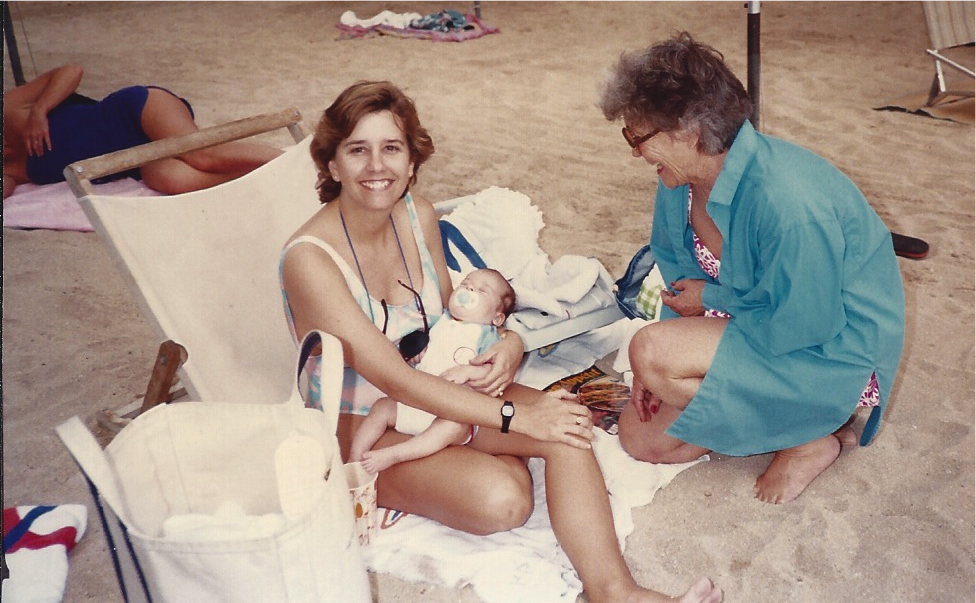
When the kids come along, you introduce them to the practice. When they’re tiny you can put them down for a nap in the shade:

Hanging out at the beach with my seven-week-old baby, and my friend Barbara

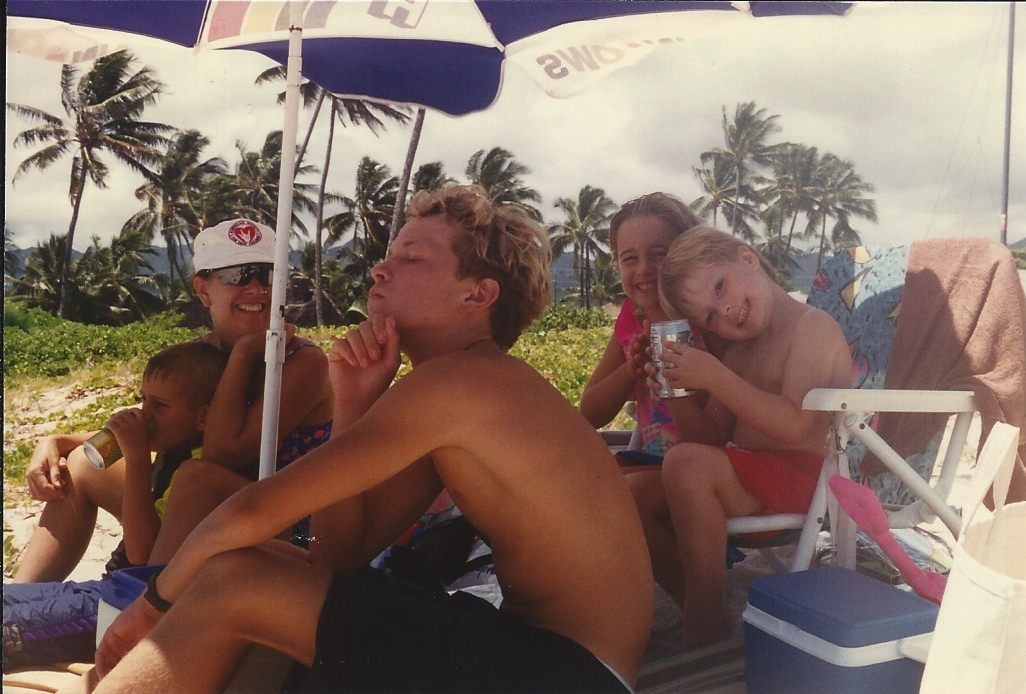
Then when they get a little older, the beach is their playground. They don’t do a lot of hanging out, but they’ll come in for a cold drink between boogie board rides:

Maybe they’ll even take your picture:

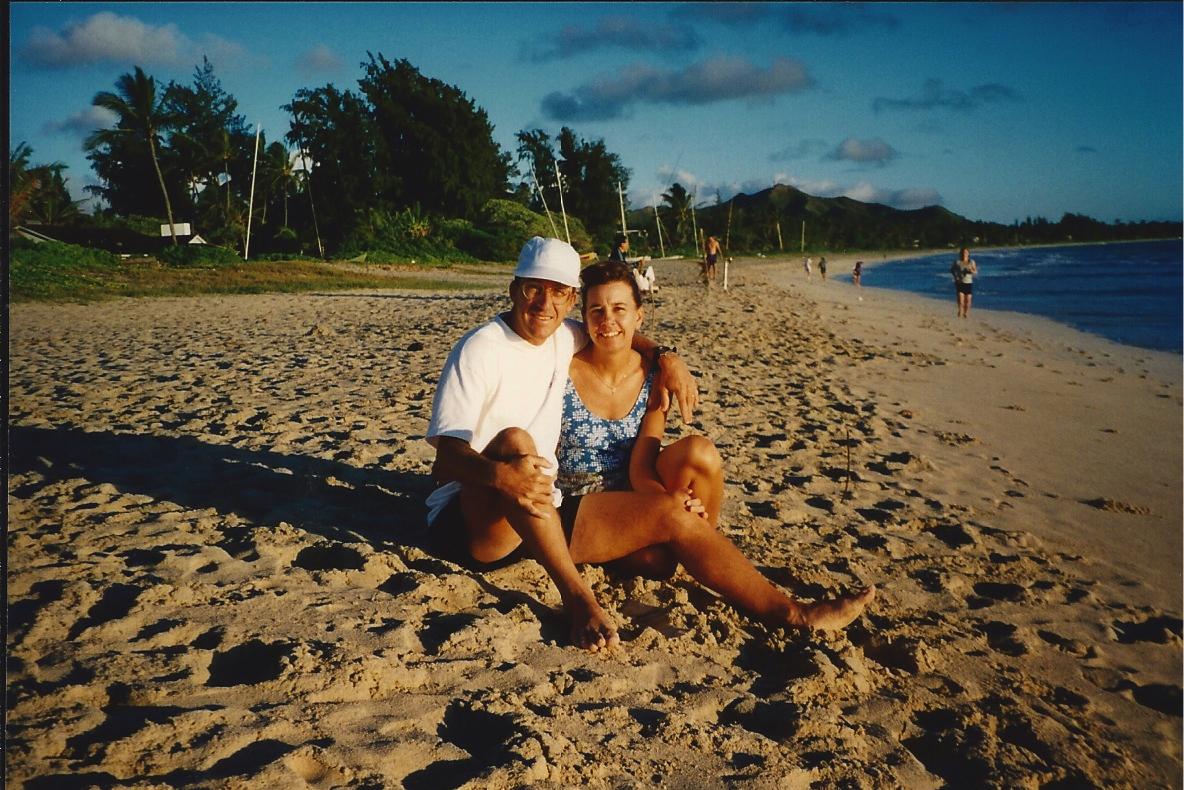
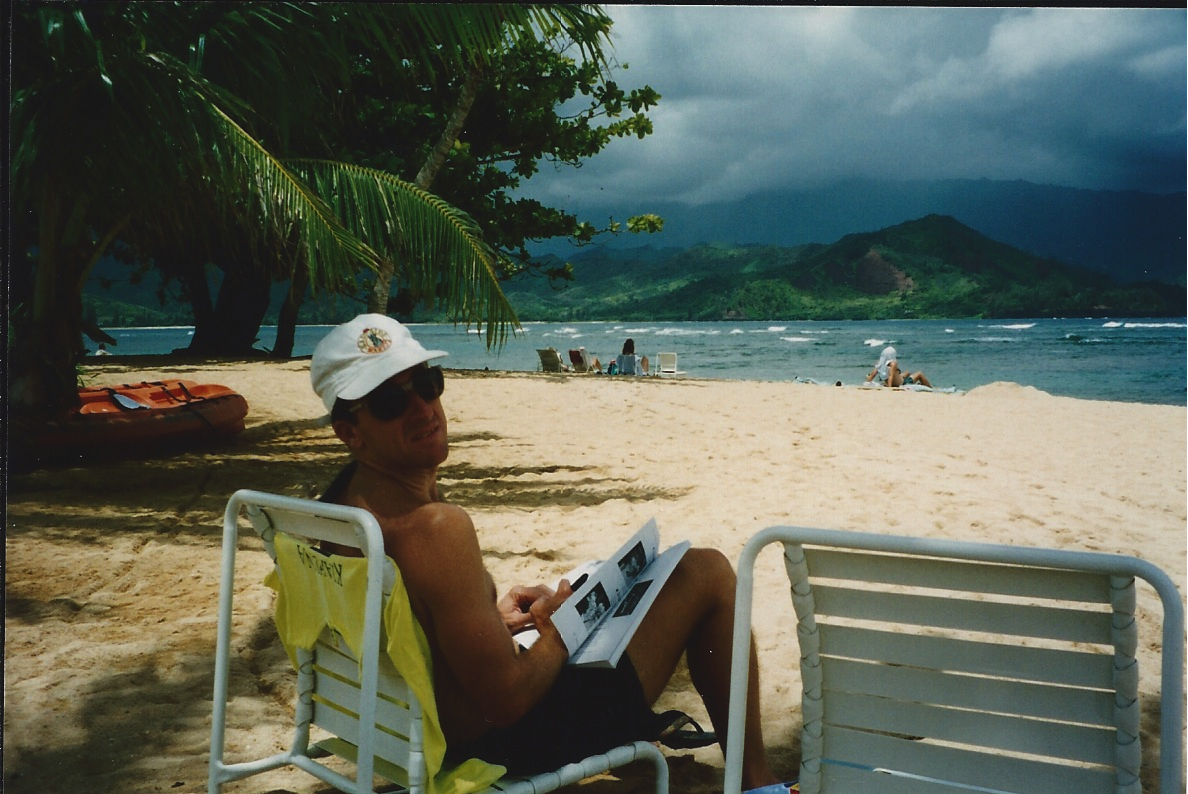
In my experience, women are better than men at hanging out at the beach. Or rather, they enjoy it more. Men are much worse at doing “nothing,” and would generally rather be be out in the water than just sitting next to it:

The Coach, humoring me. Just sitting at the beach is not his favorite thing.

Me? I could do it for hours. Wait a sec while I go grab my suit; it’s a perfect day to hang out at the beach.

This is the eighth post in my series, 31 Days of Life in my Hawaii. Click here to get the links to the other posts in the series.
31 Days of Life in my Hawaii Day 7:: Miscellaneous: Discoverers’ Day

Capt. James Cook, “discoverer” of the Hawaiian Islands in 1778

So tomorrow is the second Monday in October, which I understand from my research has been a federal holiday since 1937: Columbus Day.

Not so fast: here in Hawaii, please do not call it Columbus Day. Our observation on the second Monday in October is known as Discoverers’ Day.

Which I also found in my research isn’t even considered a holiday here. But schools and state offices and some businesses will be closed anyway. Go figure.

And, you’d be hard pressed to get a straight answer to the question of who, exactly, the “discoverers” are that we are celebrating. Or commemorating. Or acknowledging. Whatever.

Maybe it’s Captain Cook, who arrived on the scene in 1778, then a year later met his demise at Kealakekua Bay. Or maybe, since technically Cook didn’t actually discover Hawaii — the islands had been inhabited, after all, many centuries prior to his coming — it’s about those Polynesian voyagers who found their way here from the South Pacific in canoes, using only the stars to navigate their way. They, of anyone, ought to qualify as the first “discoverers” of the Hawaiian archipelago.

And since we are a state in the Union, we shouldn’t forget about Columbus entirely, so let’s lump him in with the other “discoverers.” Even though it might seem a bit out of whack, out here in the middle of the Pacific, to celebrate some Italian guy arriving in North America after voyaging across the Atlantic, 620 years ago.

The whole idea is kind of confusing; no wonder it has gotten so controversial in recent years. What with all the attempts at political correctness (various places in the U.S. now refer to the day as Native American Day, or Indigenous Peoples Day), it seems like nobody really knows what to do with the second Monday in October. But I don’t suppose you can just take a federal holiday off the calendar that’s been there for 75 years.

Anyhoo. The Coach will enjoy having tomorrow off, after a somewhat hectic first month or so in the school year. Maybe we’ll even get in a little beach time … more on that tomorrow.

This is the seventh post in my series, 31 Days of Life in my Hawaii. Click here to get the links to the other posts in the series.
31 Days of Life in my Hawaii Day 6:: Culture, customs and traditions: Leis

You are probably familiar with the old chestnut: “Aloha means hello, goodbye and I love you.” Here in Hawaii, leis* are our tangible expressions of Aloha.

In other words, if you want to say hello, goodbye, and/or I love you, giving a lei does the trick every time.

Here are some other occasions and situations in which it is customary, if not obligatory, to give or receive lei:

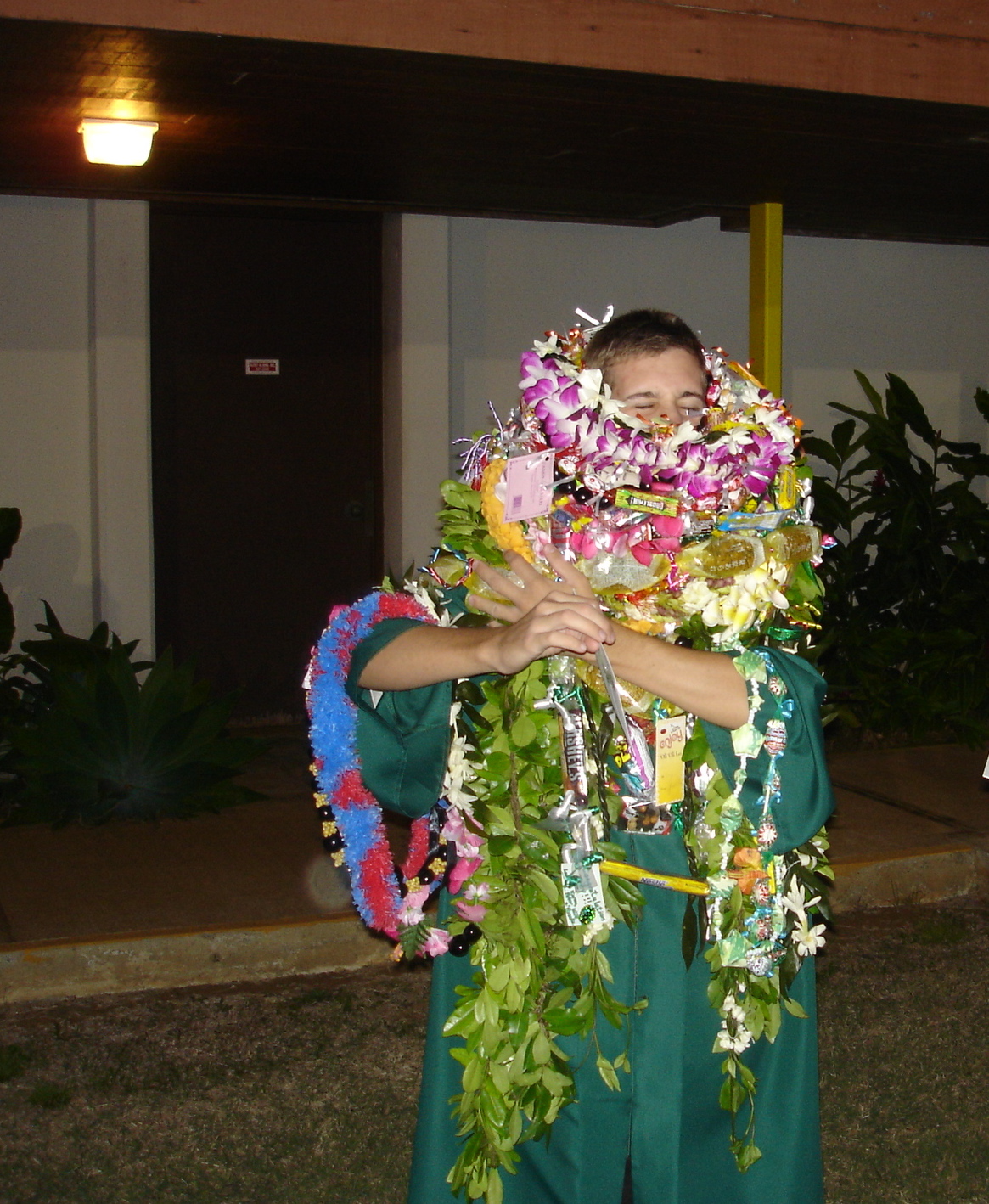
  • Graduations. Don’t even think about showing up to a graduation ceremony (or grad party) without a lei for the graduate. It doesn’t have to be a flower lei; leis fashioned out of ribbons, money, candy, and various other little gift-type things are common at graduations.

    Our boy’s high school graduation

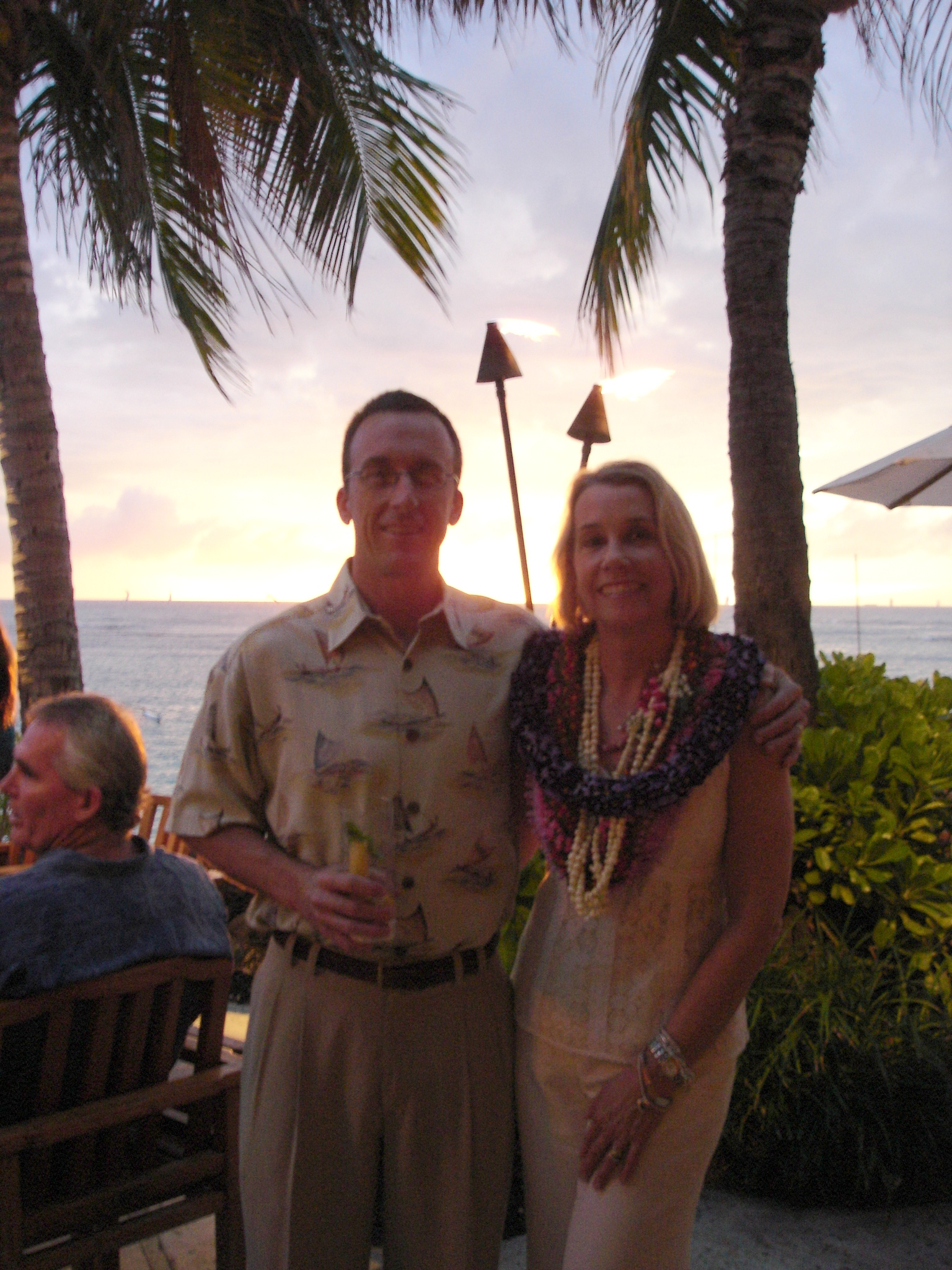
  • Birthdays. When invited to a birthday party, unless it’s for a baby or child, the celebrant always gets a lei. In fact, if you happen to see someone wearing a lei or leis at work or at a restaurant or wherever; your first question will probably be: “Is it your birthday?”

The Coach and me at my 50th birthday party

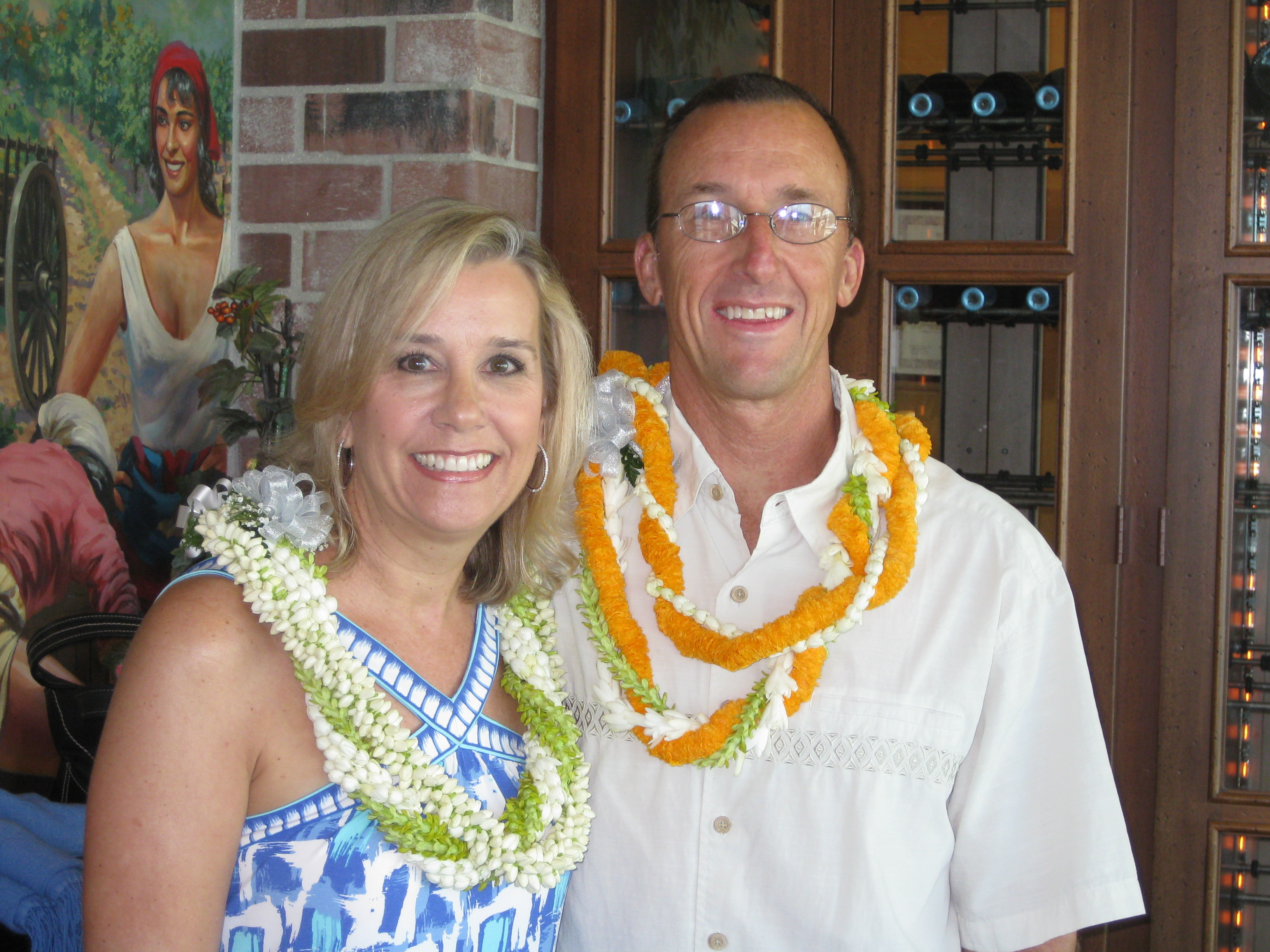
  • Anniversaries. If it’s just the two of you celebrating, the husband might not always get a lei from his wife, but he should get one for her. If you’re attending an anniversary party, bring a lei for each of them.

Our 25th anniversary. Our leis are almost exactly the same as those we wore on our wedding day.

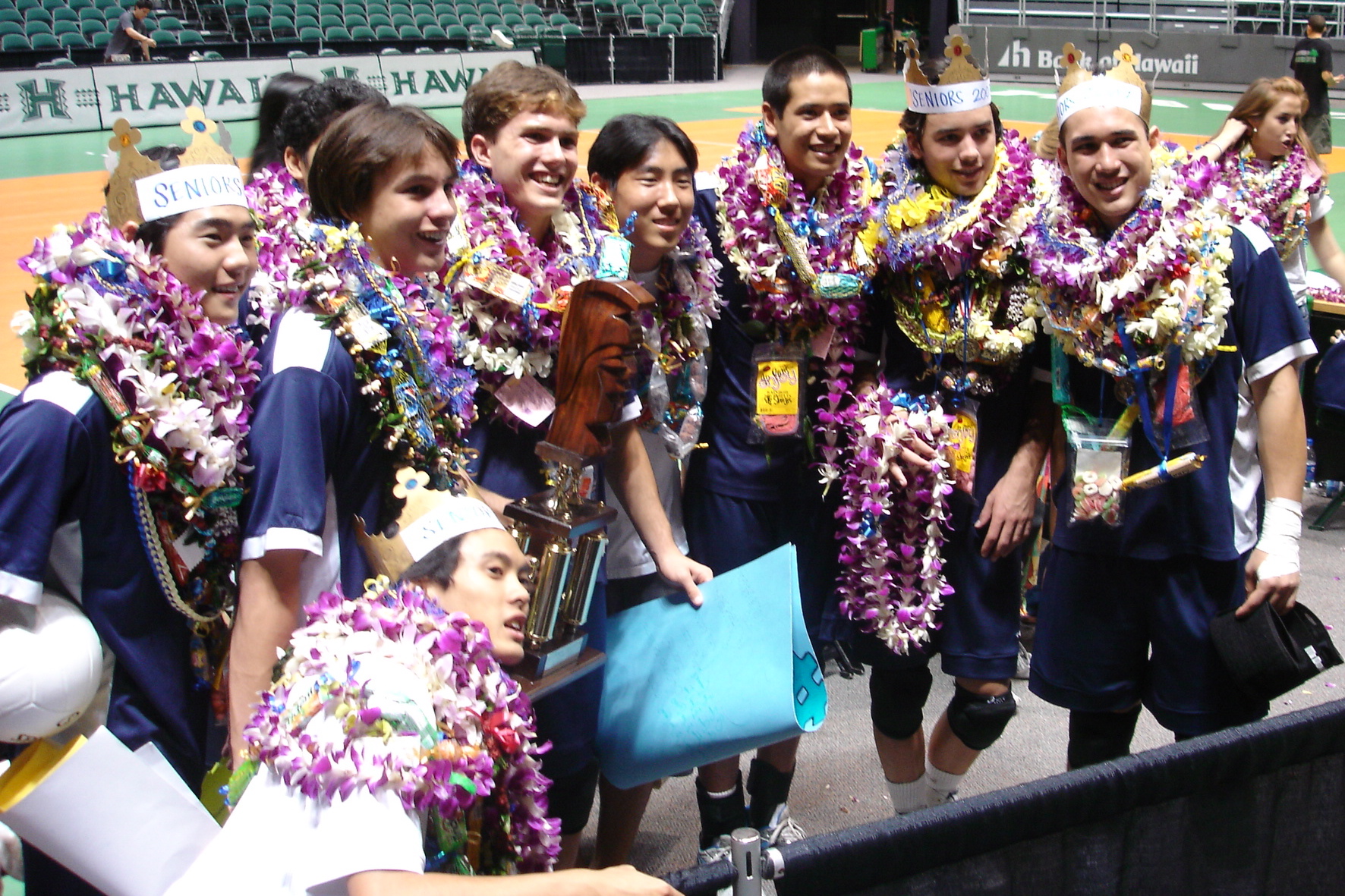
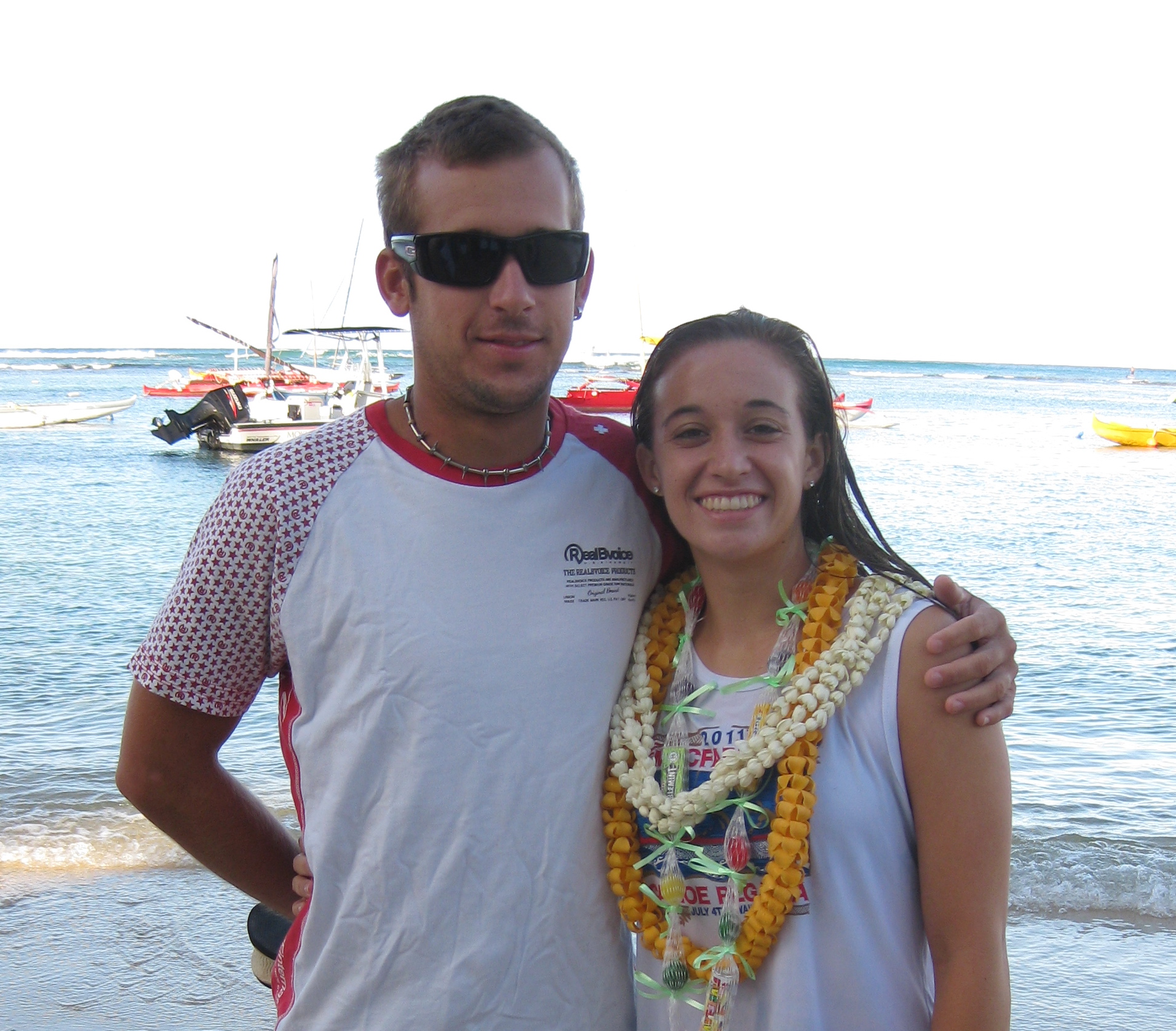
  • Sports events. For example, you bring leis to the championship game, or the last game of the season. Also you give leis to paddlers at the end of their races, and so forth. The rule of thumb is that, as for the above events, by giving your athlete or coach a lei, you’re saying “Congratulations!”

One of The Coach’s volleyball teams, after winning the state championship

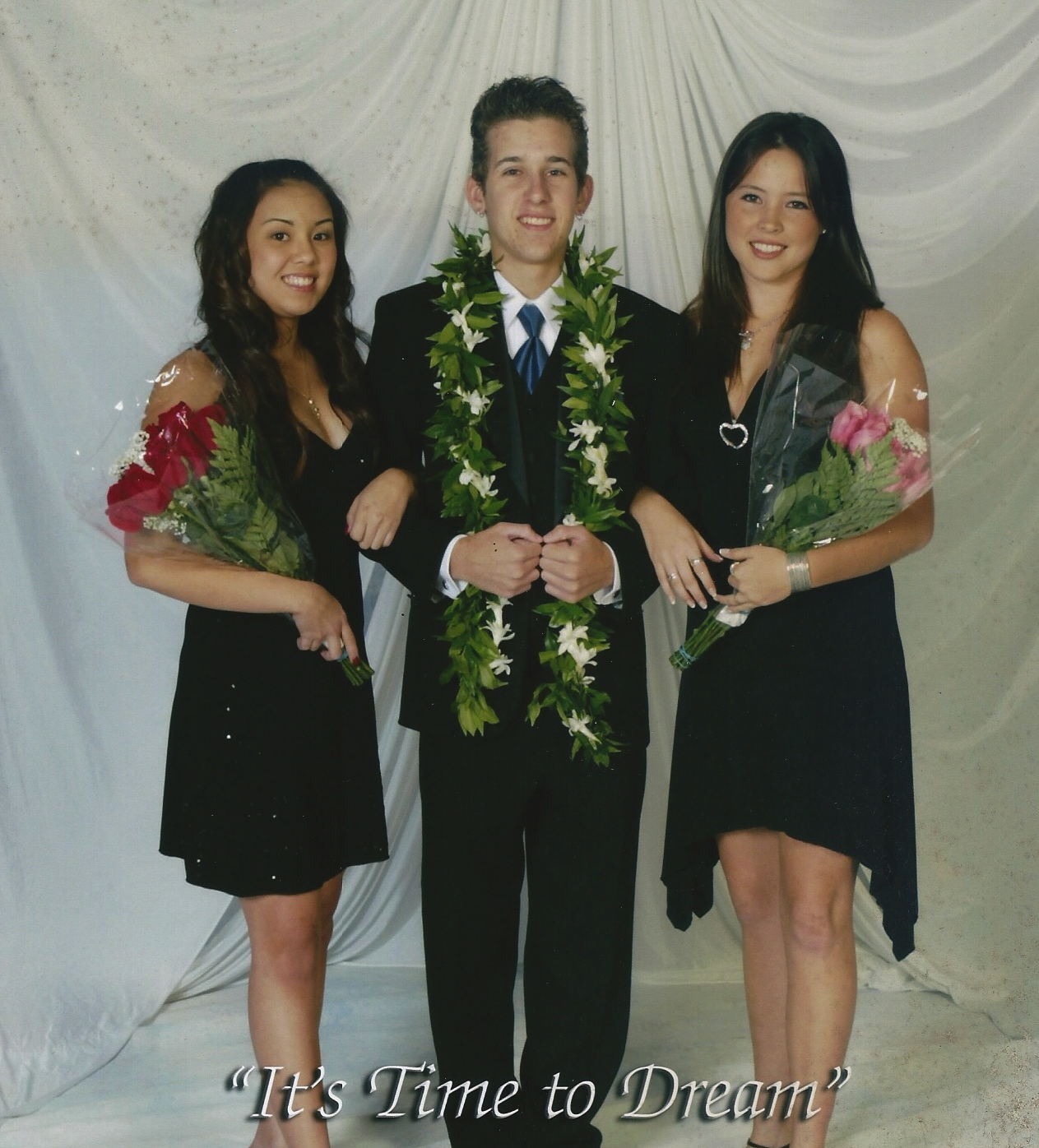
  • Proms. This tradition has changed a bit over the years. Back in my day, the girl gave her date a lei, and he gave her one. I don’t remember that we worried too much about color scheme and whatnot; we just ordered a nice appropriate lei and then exchanged them when the boy came to pick the girl up. Nowadays it seems like the boy gives the girl a corsage or bouquet instead of a lei. But the girl still gives the boy a lei.

Our boy took two dates to his senior prom. Don’t ask.

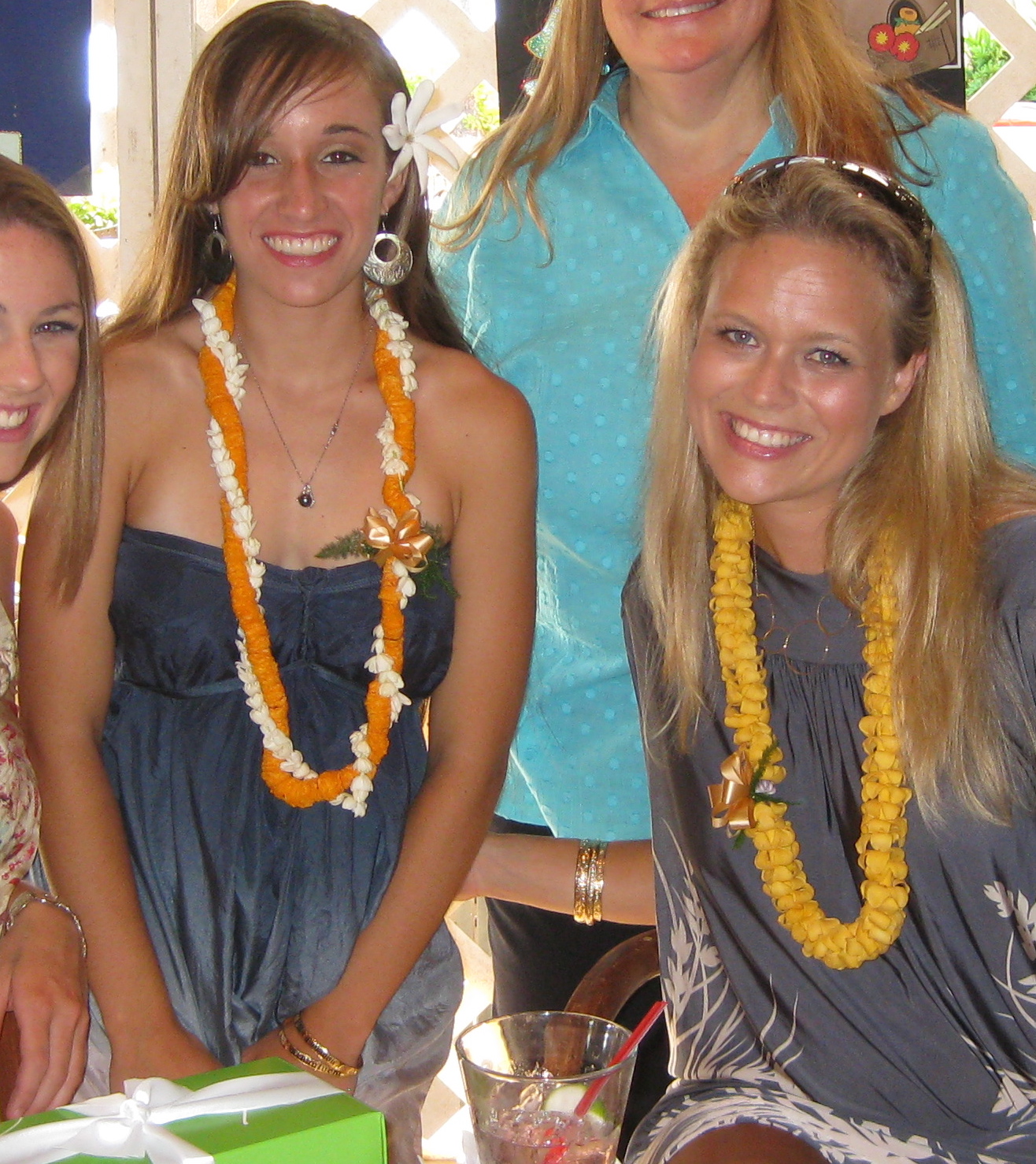
  • Not only when you want to say Congratulations, but also when you want to say Thank You. Often when someone has helped me with a project or problem, I can let them know — and others can see — how much I appreciated their help by giving a lei.

My cousin, on the right, helped me plan and put on our girl’s grad party, so I made sure she had a lei!

  • Other milestone events. Like baptisms. Because again, it’s a congratulatory thing. Any occasion which is considered congratulatory, it’s nice to present a lei.

Our girl and her brother, after her baptism

This list is by no means exhaustive — I haven’t even mentioned things like bridal and baby showers, musical and dramatic performances, and even funerals. So you can imagine there are quite a few times a year when we have to stop by the lei shop and pick up a lei for a special someone!

* Hawaiian language note: The Hawaiian language has no “S,” and so it’s really incorrect for me to add one on to the end of a Hawaiian word like lei. But, I’m going to anyway, as a courtesy to those readers who would be confused otherwise. To my `olelo Hawai`i peeps: ho`omanawanui, this time!

This is the sixth post in my series, 31 Days of Life in my Hawaii. Click here to get the links to the other posts in the series.
31 Days of Life in my Hawaii Day 5:: Critters: Kolea

Those of you in the Northern Hemisphere perhaps are familiar with migratory birds who fly south for the winter.

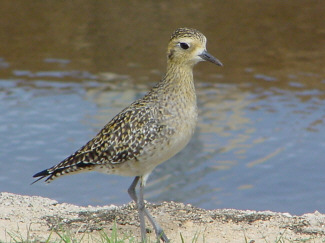
Since we’re, well, sort of the south, most of our birds don’t really go anywhere in the winter. They pretty much stick around all year long. There is one migratory bird, however, who spends winters here and flies north to Alaska for the summers: kolea, the Pacific golden plover.

photo credit: alohafriendsluau.com

The story of how this little critter does this every year is fascinating:

Maybe because they are only here for part of each year, we have a special fondness for kolea. Also, their personalities and proclivities make them intriguing to observe.

For one thing, they tend to be solitary: they don’t hang around with others of their kind. It’s almost as if they take great pride in their own self-reliance. Or maybe they’re just not friendly.

For another, they’re very territorial. They have their favorite spots to alight and graze for food, and not only do they tend to camp out in that spot for the months they are here, but woe to the bird who tries to move in on that space — almost certainly a fight will ensue.

And, as with other birds, they tend to be standoffish towards people. They are really hard to get near to; I see several along the way on my morning walk, but every time I try to get a picture of one, no matter how quiet and cautious I am, it will give me a stink eye and fly away.

In spite of all this general antisocialness, people get excited each August to see “their” birds back in their neighborhoods, and feel a certain sadness when the last one leaves in April. It somehow feels like a kind of blessing when you have one that makes your property its winter habitat.

The other day as I was leaving the house, I saw “our” kolea checking out our front yard for worms:

Kolea won’t let me get too close. Maybe he just wants me to get out of “his” yard.

Here in Hawaii we love our kolea. Do you feel that way about your migratory birds?

This is the fifth post in my series, 31 Days of Life in my Hawaii. Click here to get the links to the other posts in the series.
31 Days of Life in my Hawaii Day 4:: Flowers in my yard: Plumeria

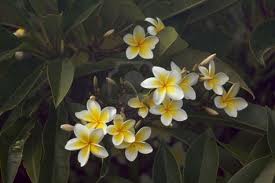
Yellow plumeria is by far my favorite of all the flowers growing in my yard. Not just because of its sweet fragrance, or its sunny style — if flowers had personalities, this one would have a most happy disposition — but mostly, I think because of all the memories.

There are lots of different varieties of plumeria in the islands, from the snowy white Singapore, to a bubble-gum pink, to a rich cabernet red. But the sturdy yellow, also known as graveyard, plumeria is probably the most common, and most commonly used for leis.

This is the most likely candidate to be the lei you will have draped around your neck when you get off the plane in Honolulu. Or at least it used to be, before the lei greeters discovered they could bring in orchids from Thailand in big quantities a lot cheaper. And that’s fine; most visitors are just happy to have the authenticity of fresh flowers hanging about them in the Hawaiian tradition.

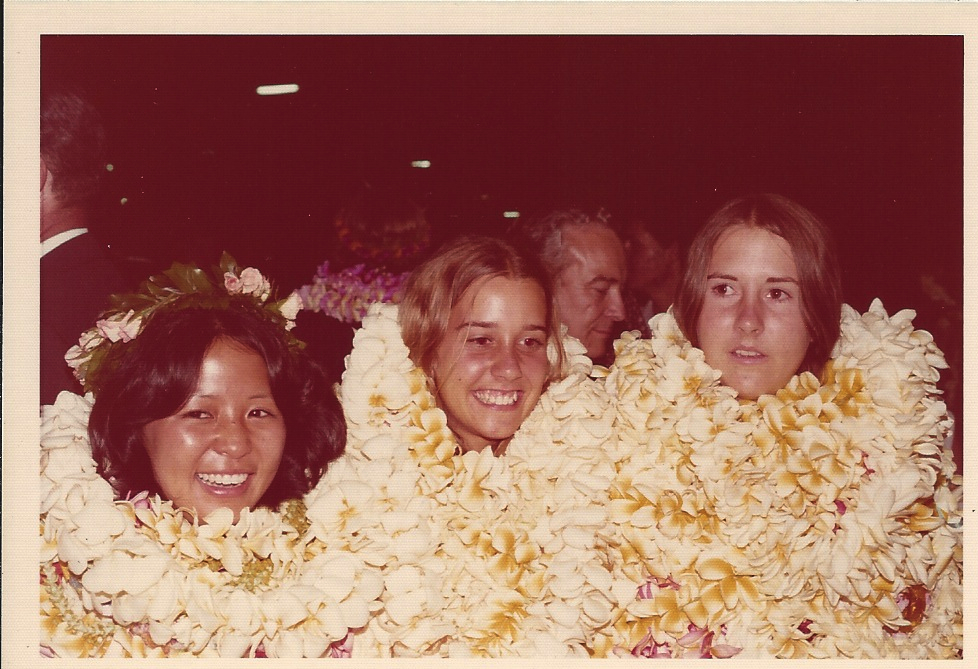
But for me, even though there are plenty of leis more elegant, exquisite or dazzling, a graveyard plumeria lei just, well, means more. This is because I’ve been making, giving and wearing them since I was about five. They were the lei of choice for every single hula performance I was in during my childhood. When I was a sophomore and junior in high school, my friends and I made dozens of them to give to our older friends on their graduation night. Then — back in the days before airport security — we would see our friends off to college at the airport, always with a lei we had made from flowers we picked in our yard.

Graduation night: almost every single lei we are wearing is yellow plumeria, made by friends and family

Nowadays we are far more likely, when we need a lei for some occasion, to run to the lei shop and buy it. But there’s nothing like giving a cheerful yellow plumeria lei that you’ve strung yourself — with aloha, of course.

This is the fourth post in my series, 31 Days of Life in my Hawaii. Click here to get the links to the other posts in the series.