31 Days of Life in my Hawaii Day 23:: Music and Dance: Wedding hula

In our Western culture, most people dance at their weddings.

You know, the bride dances with her dad, and there’s the traditional “first dance,” where the bride dances with the groom.

Here in Hawaii, the bride dances for her groom. In previous posts when I’ve talked about the various contexts of hula, I haven’t yet mentioned this one: hula as a gift to someone. In this case, as the bride’s gift to her husband.

I’m not sure how or when this tradition got started, but it’s more or less expected at the majority of Hawaiian wedding receptions that the bride will dance a hula. Even if she was never much of a serious dancer — but absolutely a must if she ever was — a bride will select a love song and learn a dance just for the occasion.

Not only did I dance for The Coach at our wedding (twice, actually, because we had a second reception in California for our mainland friends and family), but I’ve also had the honor of choreographing and teaching a wedding hula to other brides.

You might think that it puts a certain stress on the poor bride, who has enough on her plate as it is, what with all the wedding planning stuff weighing her down, to have to be learning and practicing a whole hula in the weeks before the big event.

That’s true, but I can tell you as a bride, there’s no greater privilege on your wedding day than to dance for your husband. And as a guest, to watch love on display in a wedding hula is one of the most touching and lovely ways you will ever see hula performed.

Here’s an assignment for you: Go to YouTube and search on “wedding hula,” then watch two or three of the more than 2,000 videos that people have posted of brides dancing a special hula for their grooms.

Then try not to be moved to tears by this unique communication of love. I dare you.
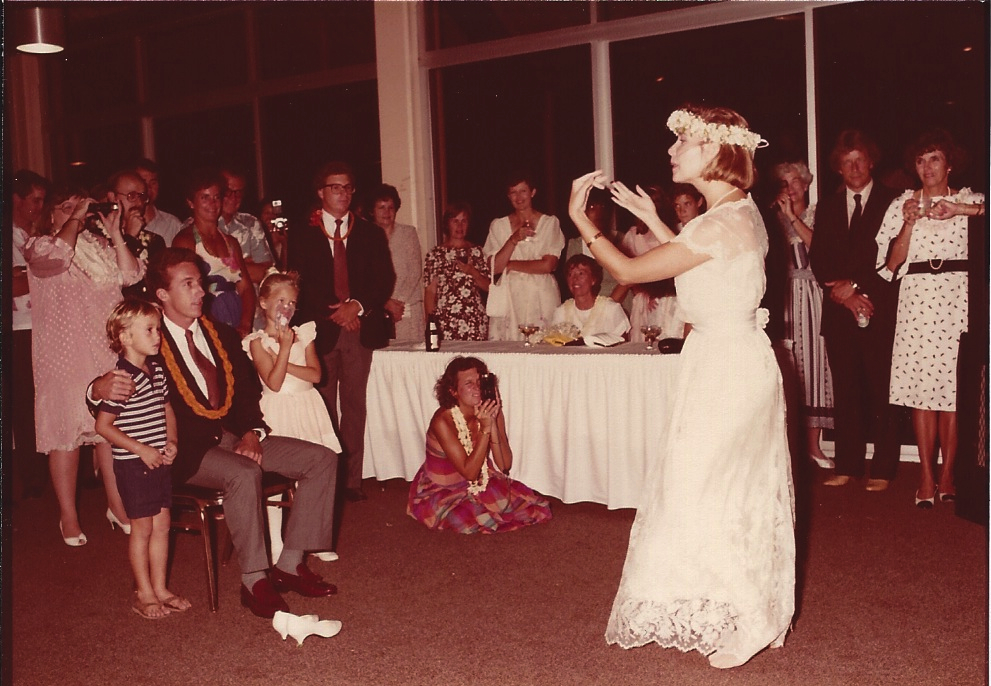
Dancing at my wedding

This is the twenty-third post in my series, 31 Days of Life in my Hawaii. Click here to get the links to the other posts in the series.
31 Days of Life in my Hawaii Day 22:: Beach and ocean: Canoe surfing

I have a friend, a lifeguard for the City and County of Honolulu, who tells me that something like 95 percent of visitors to Hawaii come here with the intention of participating in some sort of beach- or ocean-related activity.

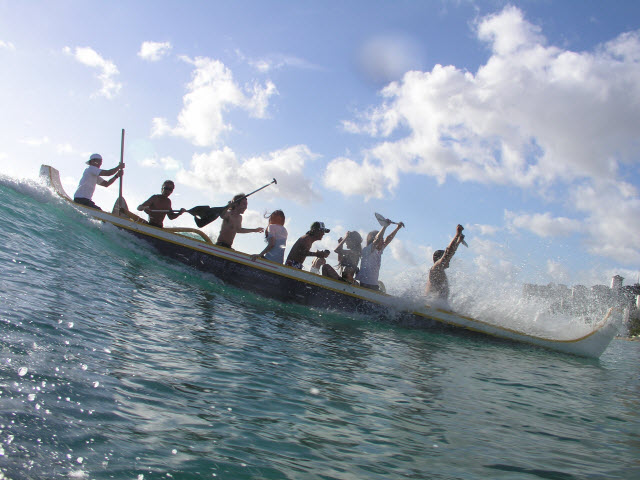
Now, obviously not everyone is going to have the skills and/or confidence to do something like scuba diving or parasailing or even learning how to surf. But what many visitors — particularly those to the world’s most famous beach, Waikiki — can do, with the help of an authentic, experienced Waikiki beach boy, is canoe surfing.

Doesn’t this look like fun?
photo credit: waikikibeachservices.com

Here’s how one of the top beach concessions describes this thrilling activity:

The outrigger canoe ride of today was derived from the original sport that was beloved by the elite of old Hawaii – outrigger canoe surfing. Outrigger canoe surfing is a sport that is unique to Hawaii, and, more specifically, to Waikiki. In old Hawaii, Waikiki was the playground of the elite, and outrigger canoe surfing was a privilege reserved solely for the aliʻi, or Hawaiian royalty. To this day, Waikiki Beach is still the only place in the world where you can experience the thrill of racing down a wave on an outrigger canoe.

The outrigger canoe is one of the safest ocean vessels today. It is the only vessel that does not require life jackets by the US Coast Guard, making it the perfect activity for the whole family. Anyone can participate in this “royal” activity and experience the thrill of surfing from the safety of our outrigger canoe.

I happen to have a particular fondness for this sport, because it is what The Coach and I did on our first date.

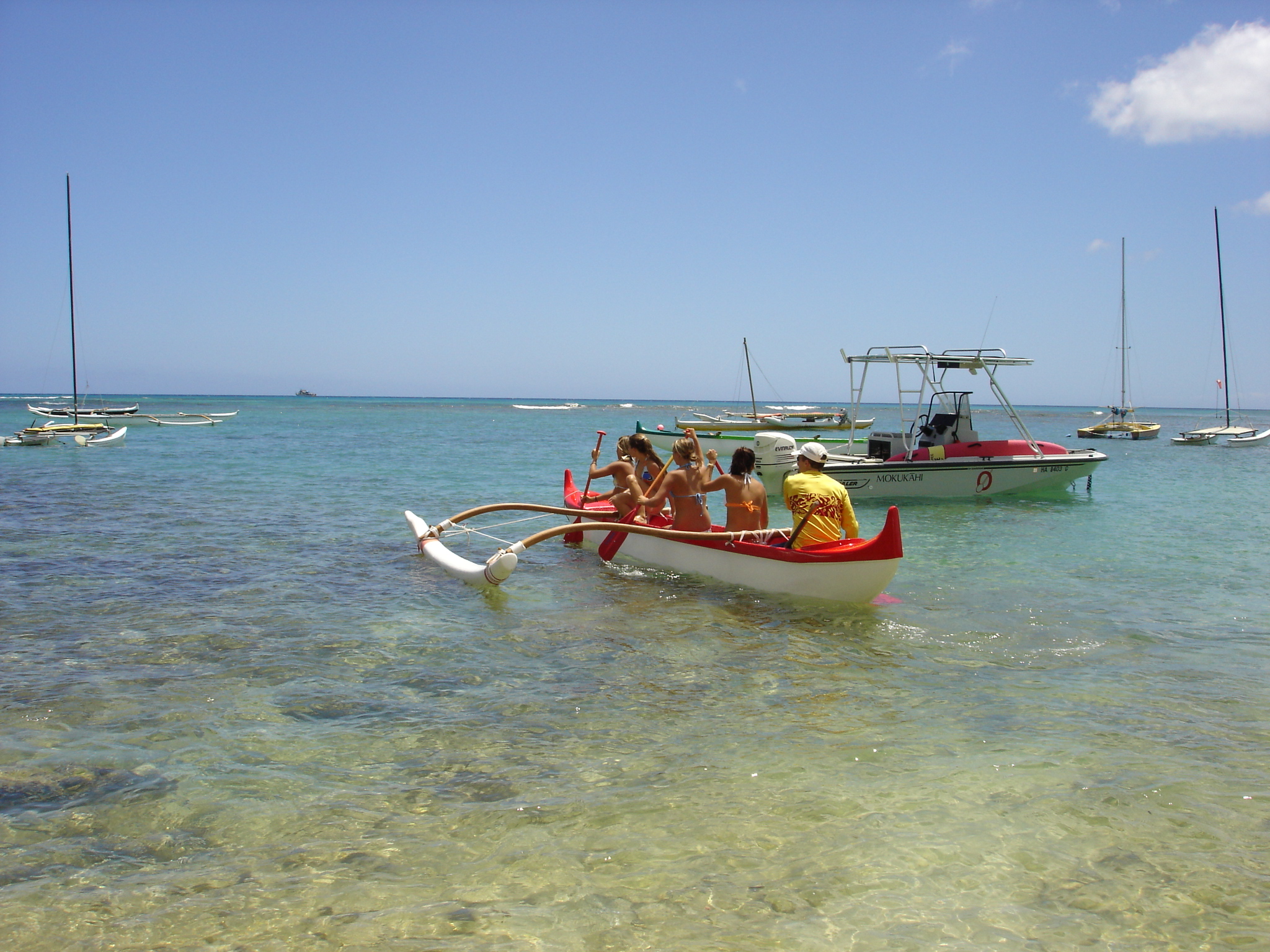
Having paddled outrigger canoes since he was a kid, he is a skilled steersman who is a master of catching and riding Waikiki’s waves. So that first time we went out together in a canoe and did a little surfing, I had a blast. Nearly 30 years later, it’s still one of the things we love to do together.

The Coach taking some young ladies out for their first canoe ride

This is the twenty-second post in my series, 31 Days of Life in my Hawaii. Click here to get the links to the other posts in the series.
31 Days of Life in my Hawaii Day 21:: Miscellaneous: Museums

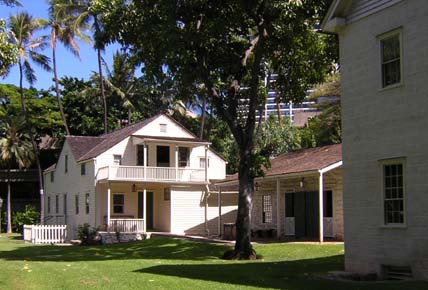
Mission Houses Museum
photo credit: armchairhawaii.com

Because visitors to islands often look to us locals for places to go and things to see, it’s a good idea have some suggestions handy.

I tend to base my recommendations on my own likes and preferences, and I’m a history buff. I know that when I travel I like to get as much of a sense the history of the place as I can. So I’m going to point you, my virtual visitor, to a few of my favorite historical museums.

First and foremost is Mission Houses Museum. Located in downtown Honolulu just next door to Kawaiaha`o Church, Mission Houses is just about my favorite. I used to volunteer as a docent there, giving visitors and school groups tours of the actual houses in which the first Christian missionaries to Hawaii lived and worked.

To be able to walk through their rooms, up and down the steep, narrow staircases, and and see their furniture and belongings, while hearing their true stories — most of which we know from their own words, preserved in the museum’s archives — is a powerful and moving way to learn about what life in Hawaii was like all those years ago.

What with the outdoor cooking (and plumbing), and several families sharing the same little New England-style house, it was no walk in the park, I can tell you.

Plus, I just get a kick out of seeing their stuff. Which is why I also enjoy another missionary house museum, this one on Hawaii Island: Lyman Museum. This one has a bit more to it, in terms of a variety of art and artifacts on exhibit, in addition to the original home, and is a wonderful representation of the diversity of our island heritage. And it has a natural history component which gives you a great feel for how the islands were formed out of volcanoes rising up from the sea.

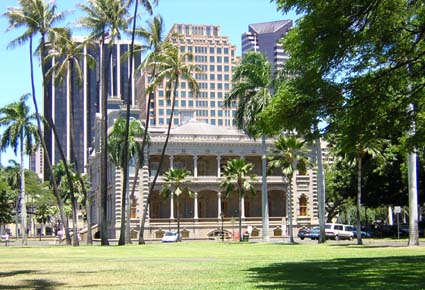
And of course, I wouldn’t dare have you miss `Iolani Palace. The only royal palace on American soil, `Iolani is utterly unique and truly priceless. It is more of an emotional experience, too, than you get at many museums. This is not merely because of the often tragic stories of our Hawaiian royalty, but because so much of what the palace originally held has disappeared, although an effort to recover these precious artifacts is an ongoing project. I guarantee your tour of our beloved palace will take your breath away.

`Iolani Palace
photo credit: armchairhawaii.com

This is the twenty-first post in my series, 31 Days of Life in my Hawaii. Click here to get the links to the other posts in the series.
31 Days of Life in my Hawaii Day 20:: Culture, customs and traditions: Aunty and Uncle

A few months ago I was browsing the blogosphere and came upon a post that made me chuckle.

It was all about how children ought to address their elders — and I noticed in both the post and the comments that it mostly had to do how they address female elders — and whether you encourage your children to use Miss First Name, or if Mrs. Last Name is preferred.

The reason I was amused is because here in Hawaii, the answer is: neither. It’s always going to be Aunty or Uncle First Name, and often for brevity’s sake, simply Aunty or Uncle.

(And not to get off on a tangent, but it hasn’t escaped my notice that in most parts of the world, the diminutive of Aunt is spelled “Auntie.” We islanders just prefer to be different so we’re sticking with “Aunty” — deal with it.)

(Sorry, another tangent: The exception that proves the rule is: teachers. The protocol there is still going to be Mr. or Mrs. Last Name. Unless they’re your parents’ friends, or your friends’ parents, then we’re back to Aunty and Uncle. Or, in the case of my daughter, who had her father as one of her teachers in first grade: Mr. Dad.)

(I could probably do a whole post with just parenthetical thoughts. But that would get annoying, so I’ll stop now. You’re welcome.)

Where was I? Right, Aunty and Uncle. We call virtually everyone who’s even a little bit older than us that, whether they’re known to us or total strangers. Same ethnic background or socioeconomic status, or different. And it comes in handy when you can’t remember someone’s name: “Oh hi, Aunty, how are you?” See what a nice save that was?

The interesting thing is, though, that using Aunty and Uncle might seem like an intimate or familiar way to address people, but in fact the way it feels in island culture is that it’s the height of respect, every bit as much as Mr. or Mrs. Last Name, or even Sir or Ma’am.

So go ahead, call me Aunty Plum. I’ve earned it.

This is the twentieth post in my series, 31 Days of Life in my Hawaii. Click here to get the links to the other posts in the series.
31 Days of Life in my Hawaii Day 19:: Critters: Gecko

If you were to spend the night in someone’s home in Hawaii, you might be wakened from sleep by a strange chirping noise.

Something like a cricket on a microphone. Hooked up to a subwoofer.

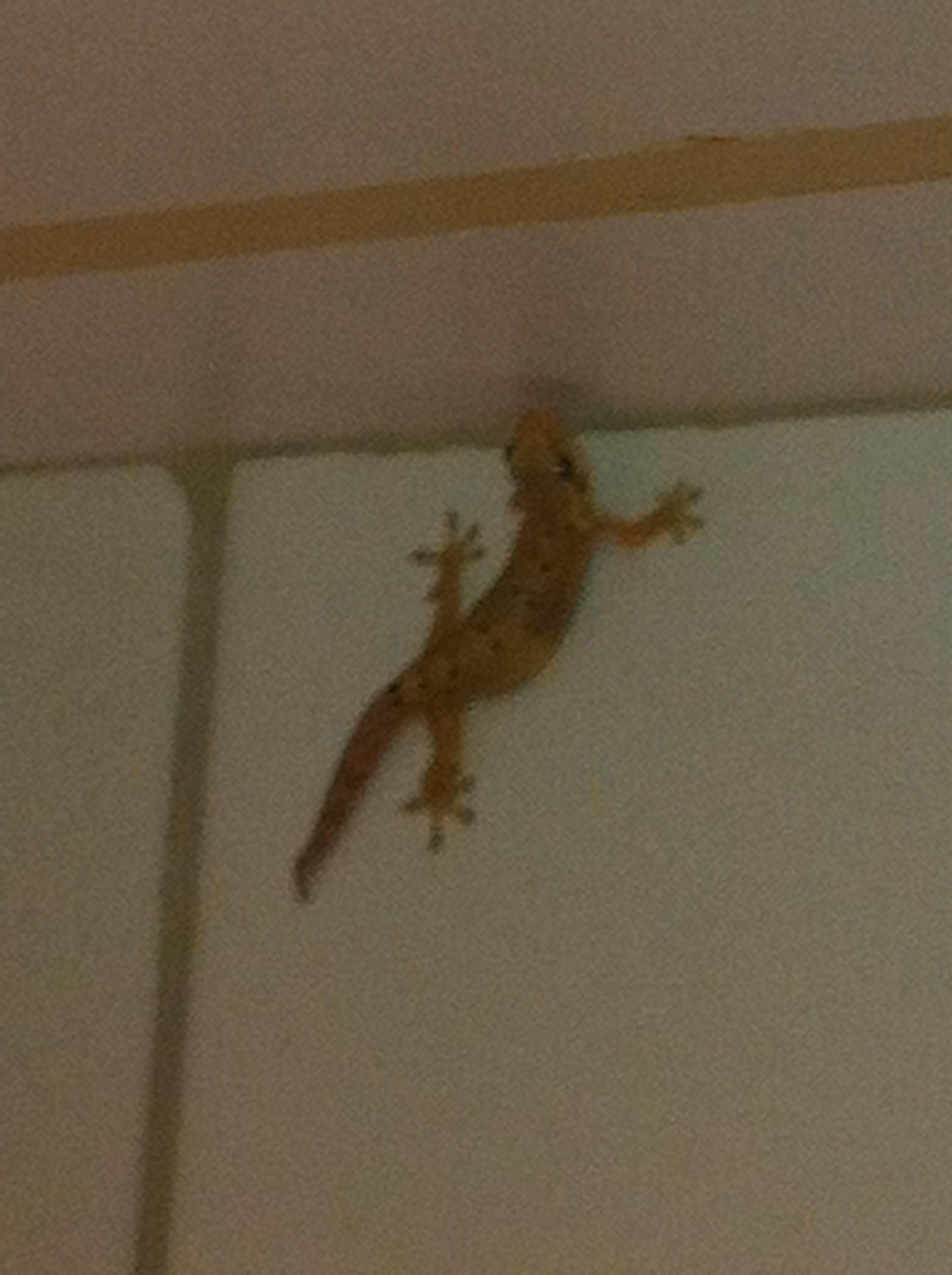
You would find it hard to believe a little critter, not more than four inches from nose to tail, could make such a noise. This is our friend the gecko.

I hasten to clarify that Hawaiian geckos bear little resemblance to the green creature which is the mascot for a certain insurance company. For one thing, our Hawaii geckos are not green, they’re more of a light brown. I guess ours are one of the other 800 species of geckos found around the world.

Folks in Hawaii tend to have mixed feelings about geckos. Some people considers them pests and can’t stand the idea of little beige lizards making themselves at home in our houses. Others — like me — find them harmless and even a little cute, as well as useful for eating bugs like termites, which really are pests.

Here’s my little buddy the gecko who is currently living in my kitchen:

This is the nineteenth post in my series, 31 Days of Life in my Hawaii. Click here to get the links to the other posts in the series.
31 Days of Life in my Hawaii Day 18:: Flowers in my yard: Tiare

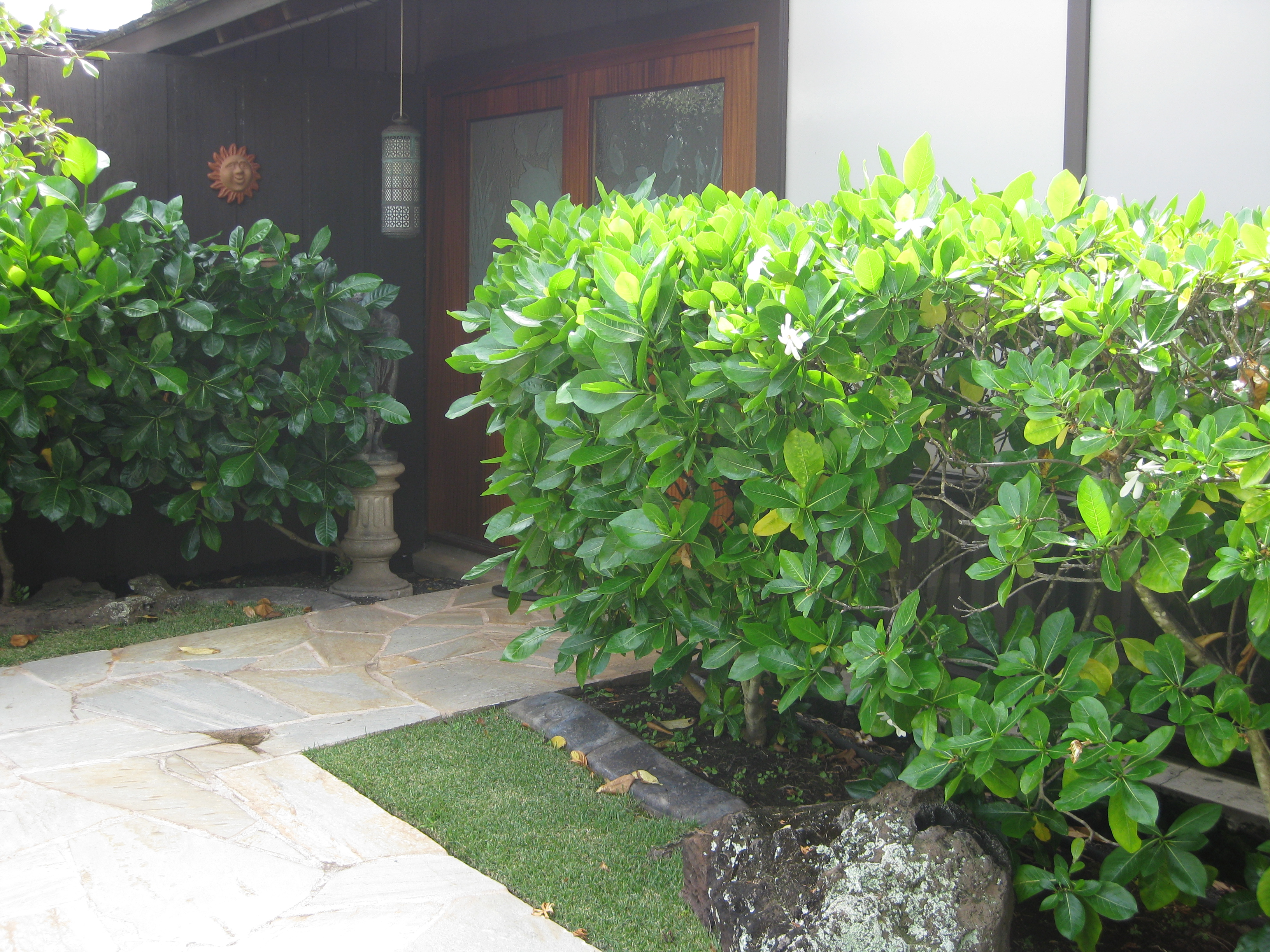
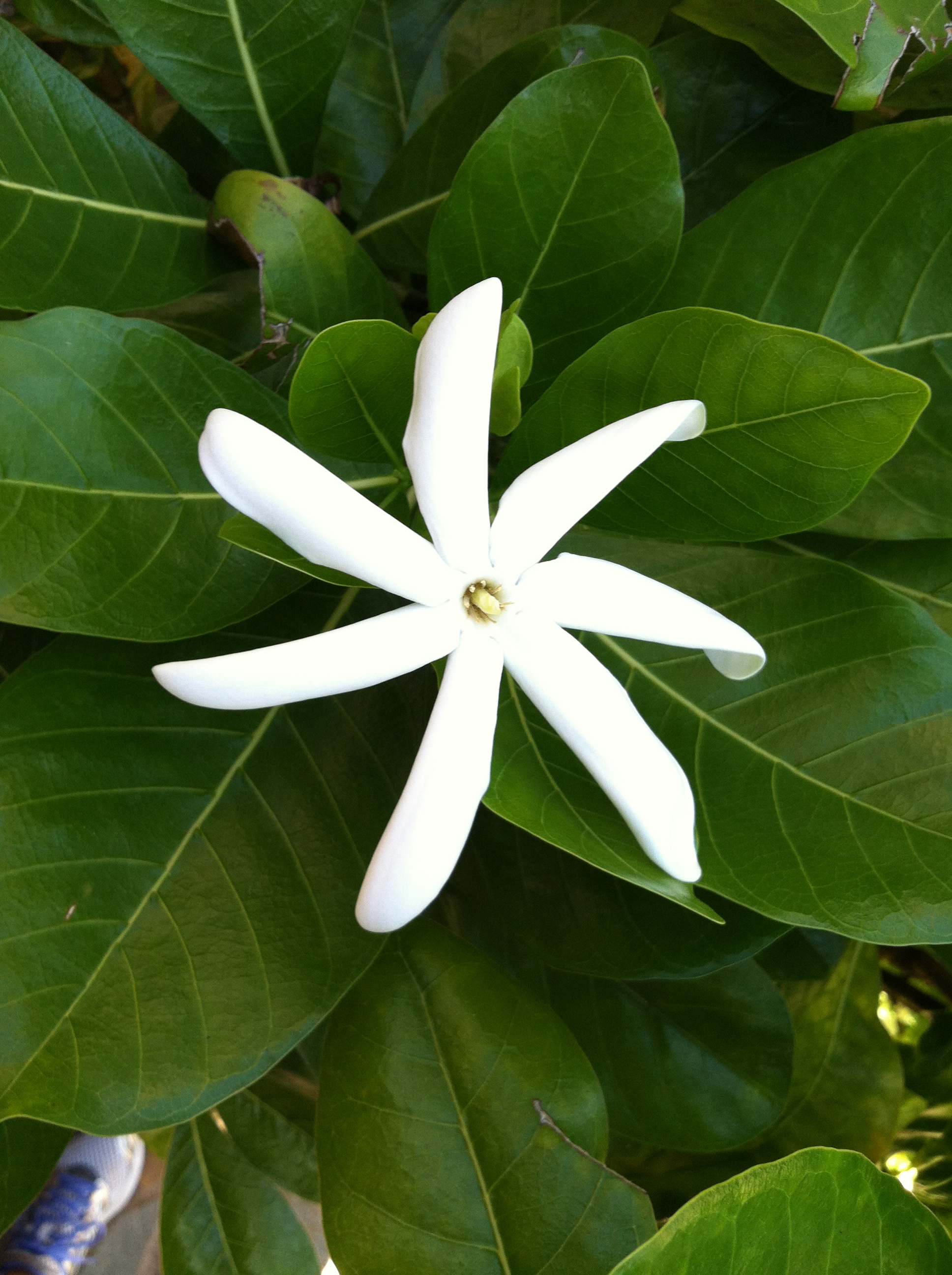
A pair of shrubs flank my front door: Tahitian gardenia (gardenia taitensis), or tiare.

The national flower of Tahiti, tiare is also beloved in Hawaii for its simple beauty and evocative fragrance.

This little snow-white blossom has a somewhat limited number of uses here in the islands. Rarely do we make leis from it — although the Tahitians do — because when the bud blossoms, it opens up flat like a daisy, which is not conducive to most lei designs.

And its small size and delicate structure — seven narrow, fragile petals projecting out from a hollow stem — prevent it from being useful in bouquets or arrangements. It pretty much starts to wilt and brown the moment you pluck it.

But as I say, it’s a special flower that holds special favor with island women. The tiare is infused in coconut oil to create Monoi Tiare Tahiti, the preferred moisturizer and tanning oil of our youth. To this day when I catch a whiff of Monoi, memories come flooding back.

When we wear flowers in our hair, tiare is one of our top choices. Perhaps you have heard of the island custom of wearing a flower over your ear, and that which ear you choose depends on your relationship status. The flower over your left ear (your heart side) means you’re spoken for; over your right ear means you’re available.

Here’s our girl with one of our tiare:

I think she either had a boyfriend at the time, or just prefers the left side.

This is the eighteenth post in my series, 31 Days of Life in my Hawaii. Click here to get the links to the other posts in the series.
31 Days of Life in my Hawaii Day 17:: Food: Rice

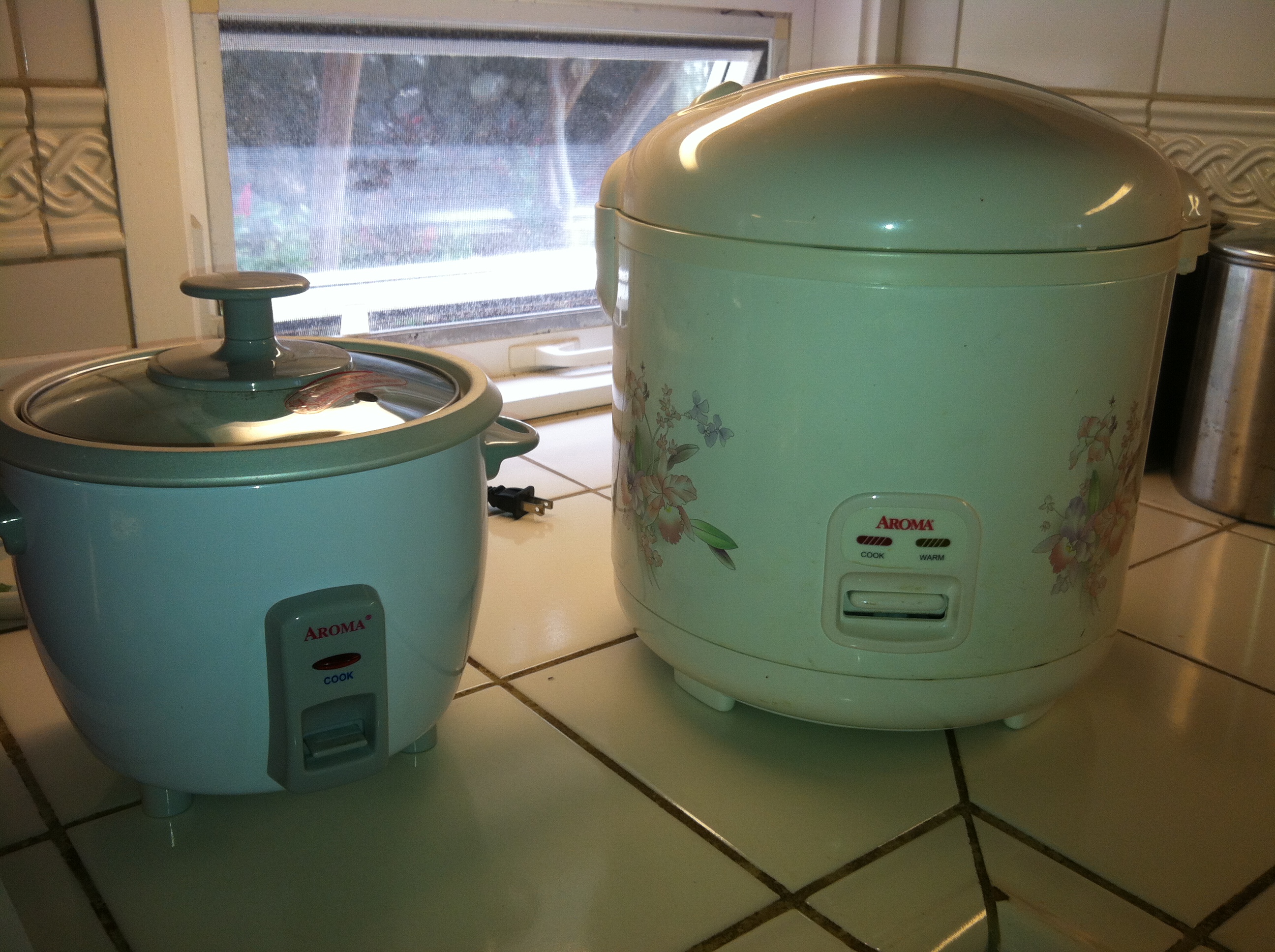
In Hawaii homes, there is one staple that is the sine qua non of every kitchen: rice.

Also, your rice cooker.

My rice cookers. The little one is for everyday, when it’s just The Coach and me, and the big one is for when we have more mouths to feed.

The custom of rice with meals — in some homes, every meal — originated about 150 years ago, with plantation workers who came to Hawaii from Asia. Eventually pretty much everyone, regardless of ethnic background, came to expect that rice is the go-to side dish in Island homes.

We buy our rice by the 20-pound bag. And will go through 20 pounds a lot faster than you might think.

I used to give bags of rice as gifts during the Christmas season to my children’s teachers, school bus drivers, and other service providers.

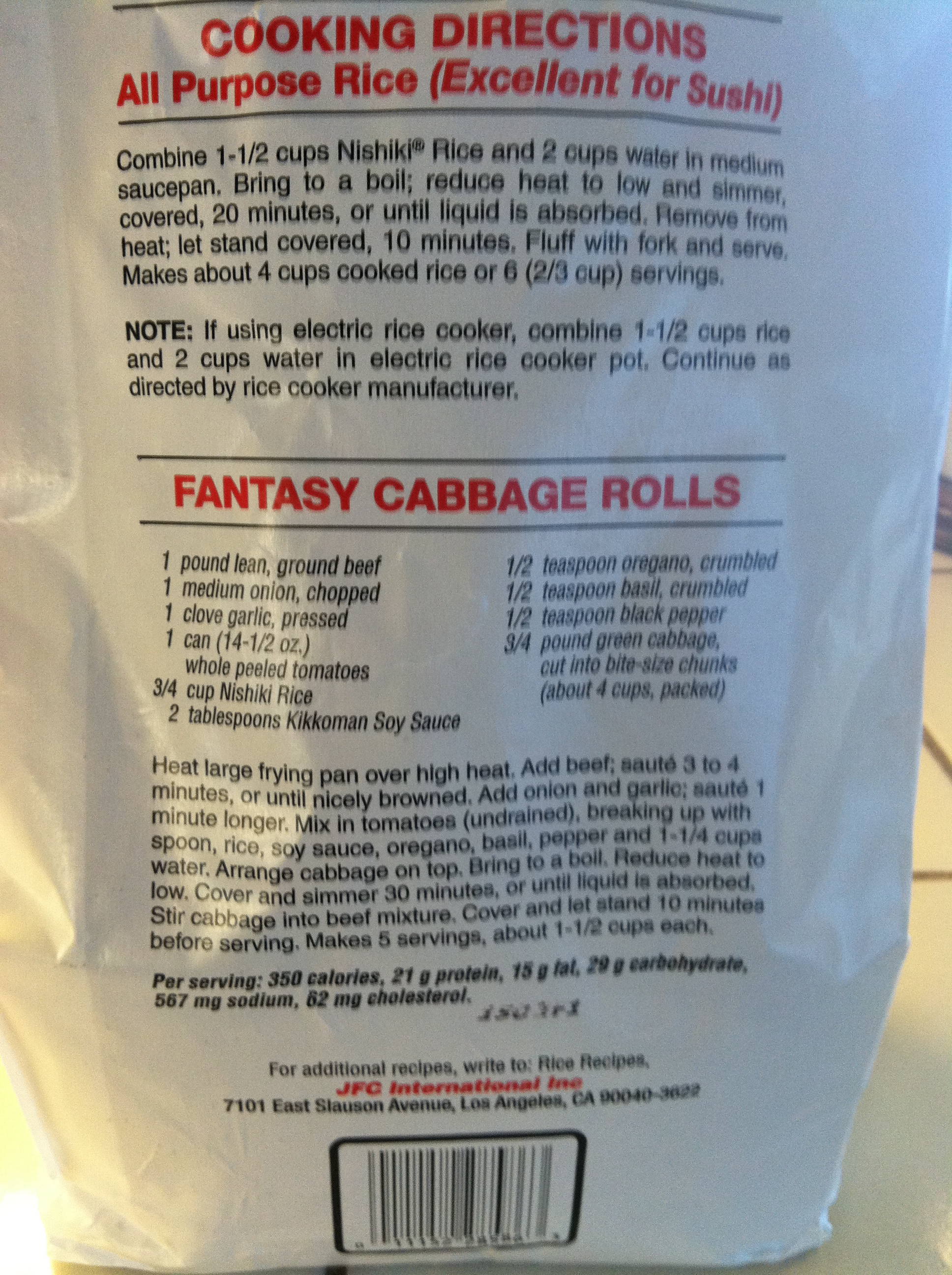
Speaking of bags of rice, the last time I brought one home from the store, it had this recipe on the back:

I don’t know about you, but I don’t think of cabbage rolls as something to fantasize about.

Anyway, because as I’m writing this after just returning home from a four-day trip to the mainland and I’m just a bit jet-lagged, I’m going to refer you to an essay I read some years ago by a Hawaii author who summed the whole rice thing up rather perfectly.

Rice is more than food; rice is love.

This is the seventeenth post in my series, 31 Days of Life in my Hawaii. Click here to get the links to the other posts in the series.
31 Days of Life in my Hawaii Day 16:: Music and Dance: Merrie Monarch

Every April here in Hawaii, we have what some call the Olympics of hula: the Merrie Monarch festival.

It’s not an altogether accurate analogy, however. “Olympics” calls to mind fierce competition and going for the gold and all that. While Merrie Monarch is a multi-day, competitive event, because it’s deeply ingrained in and an embodiment of the Hawaiian culture, it is, as you might expect, all about the aloha.

Anyway, this event is a celebration of the art of hula that has been going on in Hilo, Hawaii for close to 50 years now. It derives its name from one of our last kings, King Kalakaua, who was known as “the Merrie Monarch,” because he was credited with bringing hula back into favor in Hawaii, after the Christian missionaries had banned its practice.

He is also credited with saying something that has become the motto of the Merrie Monarch festival: “Hula is the language of the heart, therefore the heartbeat of the Hawaiian people.” Isn’t that beautiful?

The hula competition part of Merrie Monarch has always been broadcast on local television, and nowadays with live streaming video, thousands around the world tune in to watch dancers, both solo and in groups known as halau, or hula schools, compete to be the best in ancient and modern styles of hula.

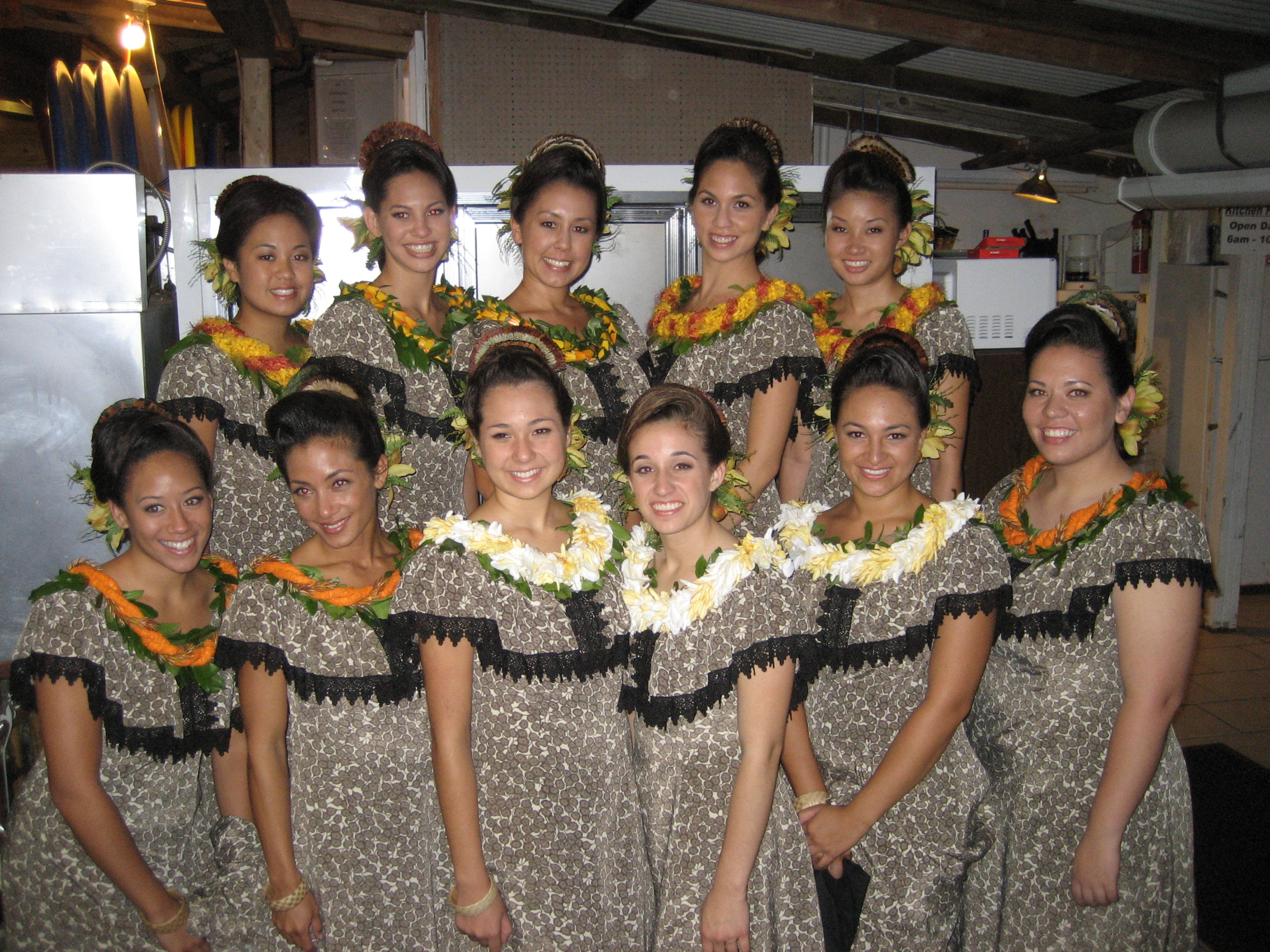
My daughter and her hula sisters backstage at Merrie Monarch

So it’s something I tune in to watch every year, and four years ago was lucky enough to be there in person to watch my daughter compete. In some ways you get a better view of things watching on TV, but when you’re there, it’s quite the sensory experience: the fragrance of hundreds of flower leis, the luscious music performed by noted Hawaiian artists, even the chilly Hilo night air in the open-air stadium.

I couldn’t find a clip of my daughter’s halau when she was with them in 2008, but here’s part of what they did this year:

This is the sixteenth post in my series, 31 Days of Life in my Hawaii. Click here to get the links to the other posts in the series.

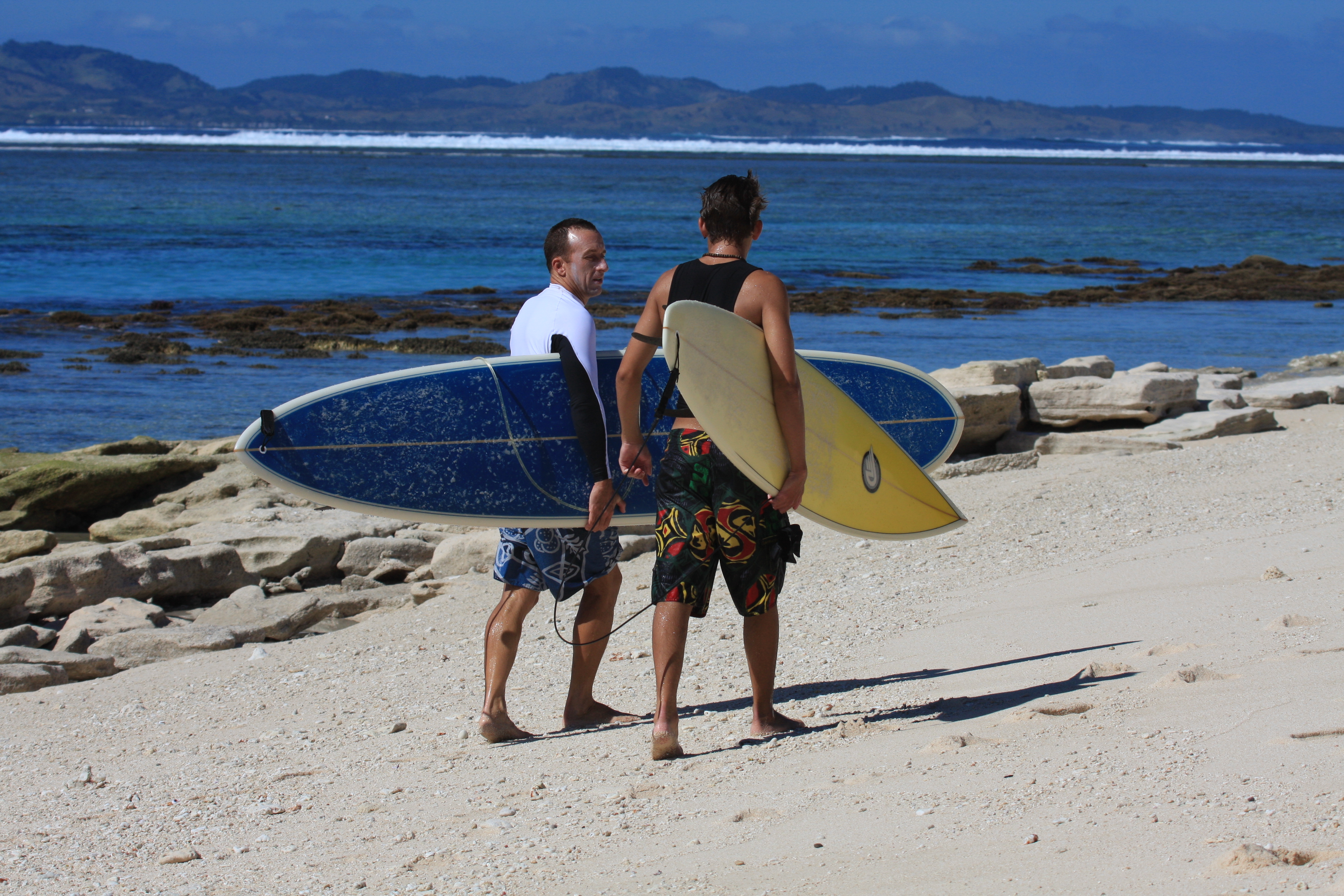
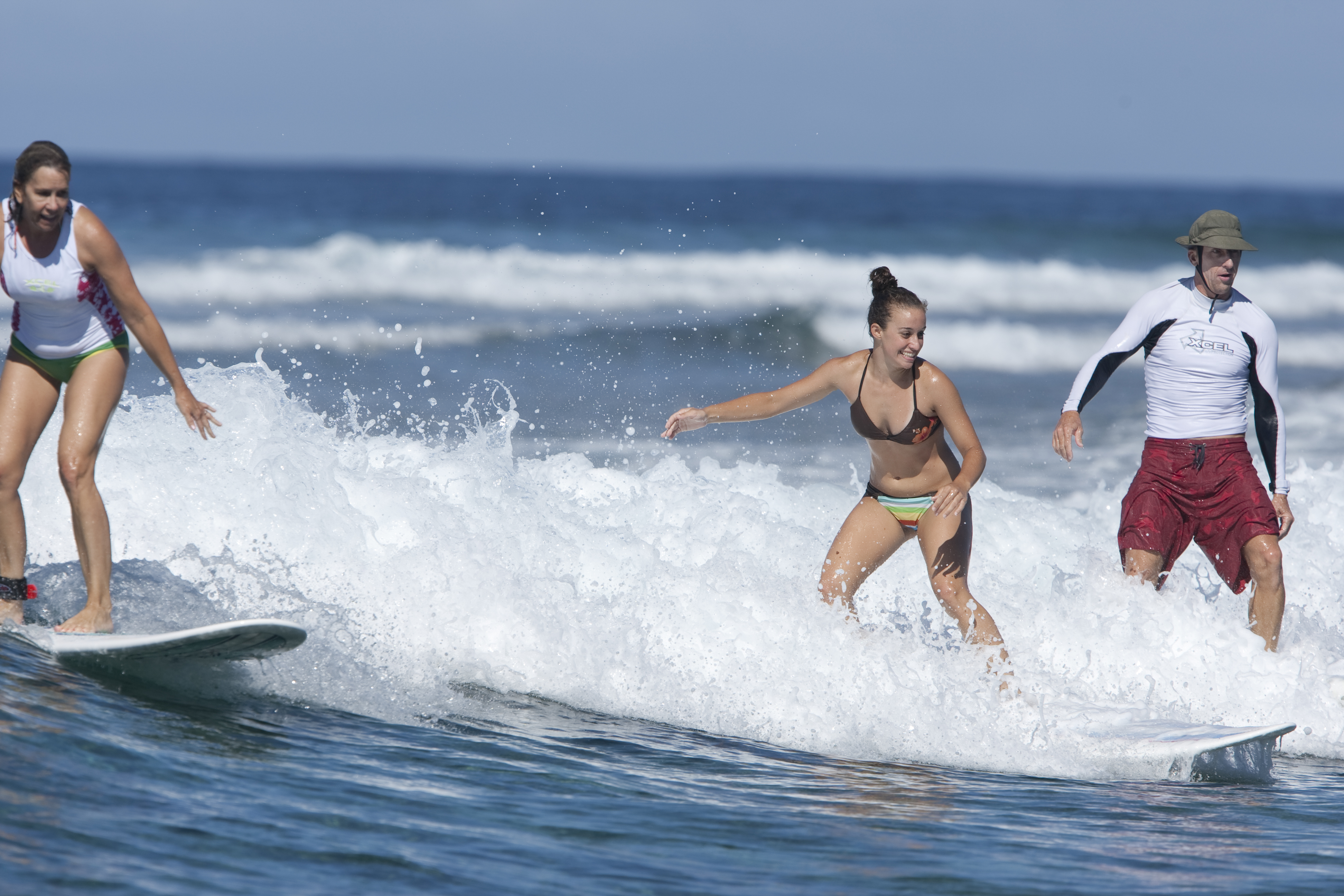
31 Days of Life in my Hawaii Day 15:: Beach and ocean: Surfing

You knew I was going to do a post about surfing this month, didn’t you?

Surfing, of course was not only invented in Hawaii, it’s Hawaii’s signature sport.

Even so, you’d be surprised how many people here have never even been on a surfboard, much less take it up as a hobby.

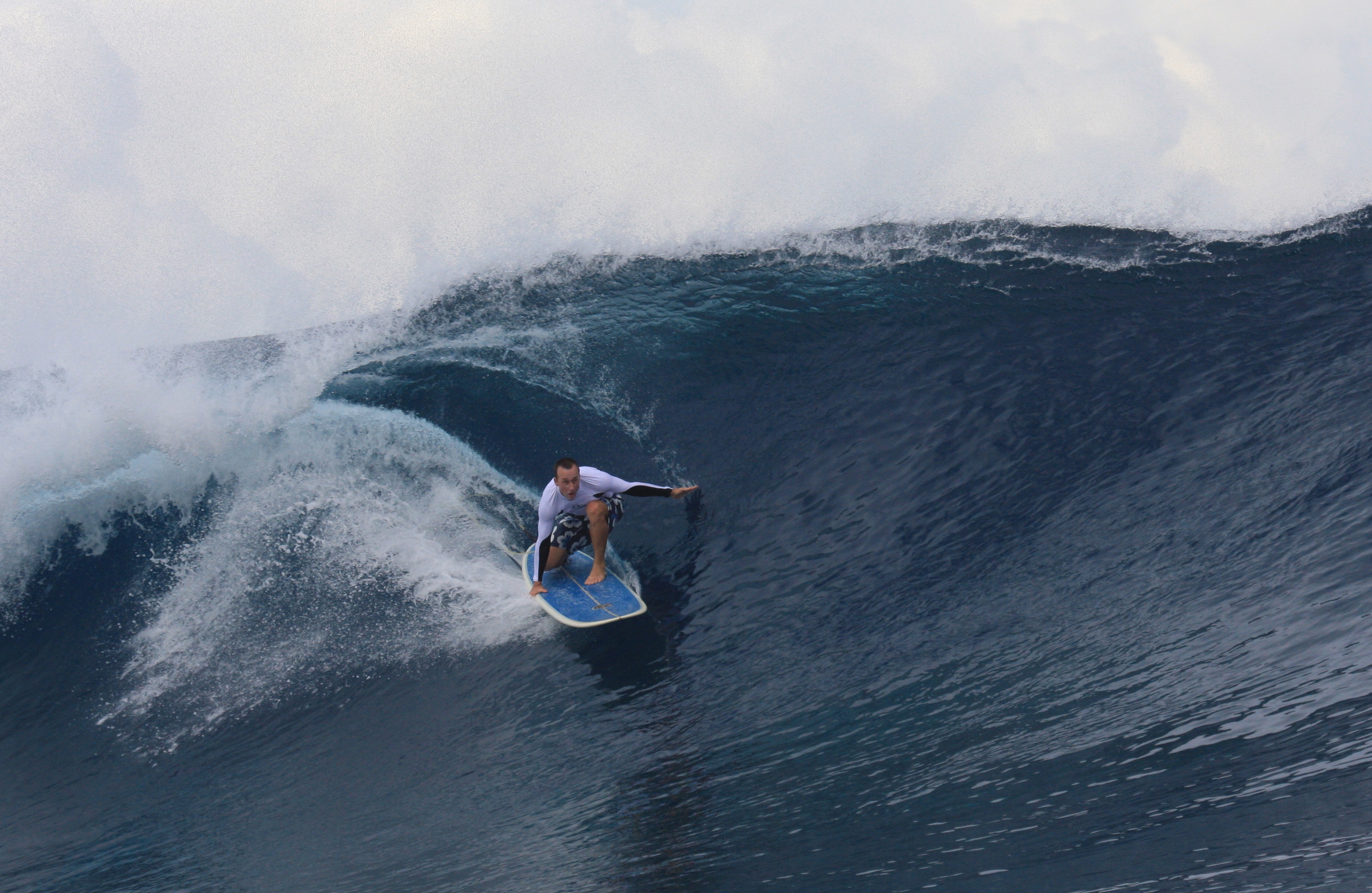
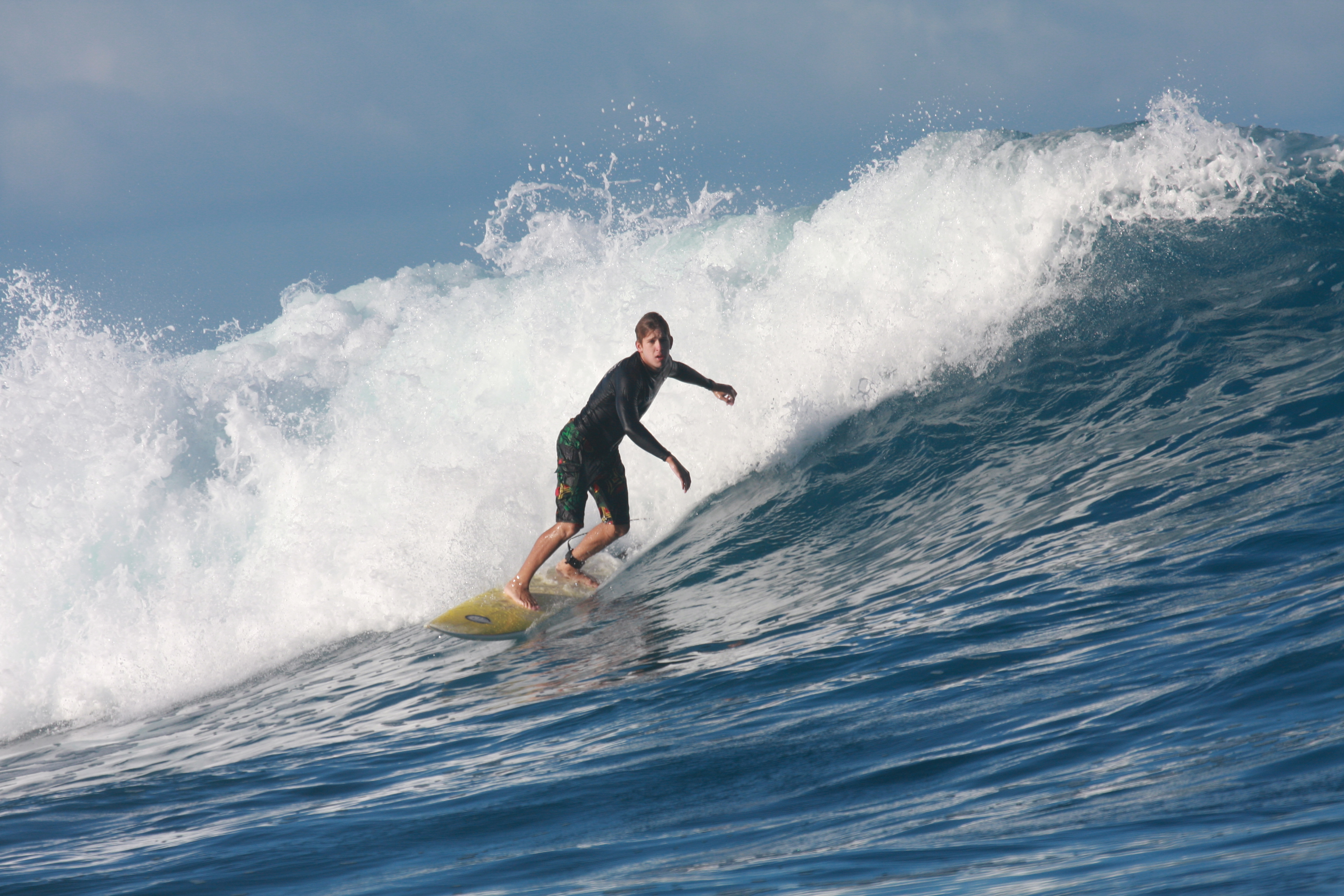
That doesn’t apply to our family, however. We’re what you’d call a multi-generational surfing family.

Last week when I said that hanging out on the beach is the best stress reliever there is, I was talking about myself. My husband, his dad, and our boy would argue that case for surfing.

All three of them began surfing at a young age, which is how most surfers get their start. As soon as you can swim — and sometimes before, if your dad puts you on his board with him — you get out on your board in the little shorebreak surf. What we call ankle snappers.

Eventually you gain more skills and graduate to bigger and more challenging waves. But real surfers will tell you: it’s not about how big the wave is, and they’re right. You can have fun in any size waves.

It’s not real hard to learn, but it might take years to get really good at it. I picked it up when I was around 14 or so, but I’ve never gotten better than so-so at it.

Still, the ones who surf for fun (that is to say, most surfers) would argue that that’s not the point. What it’s really about is being out in the ocean — some would say one with the ocean — enjoying the beauty of God’s creation while playing on the waves. It can be — and often is — therapeutic and exhilarating at the same time.

This is the fifteenth post in my series, 31 Days of Life in my Hawaii. Click here to get the links to the other posts in the series.
31 Days of Life in my Hawaii Day 14:: Miscellaneous: Church

It’s Sunday, so off we go to church.

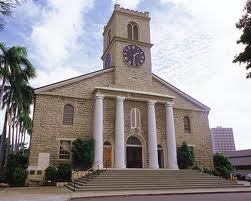
If you are visiting the islands and want a suggestion for a place to worship Sunday morning, I highly recommend Kawaiaha`o Church.

Kawaiahao Church

One of the first Christian churches established in Hawaii, Kawaiaha`o holds a special place in my heart. I first attended services here as a teenager; even then I was deeply moved by the beauty of the service, and by the stirring hymns and prayers in the Hawaiian language.

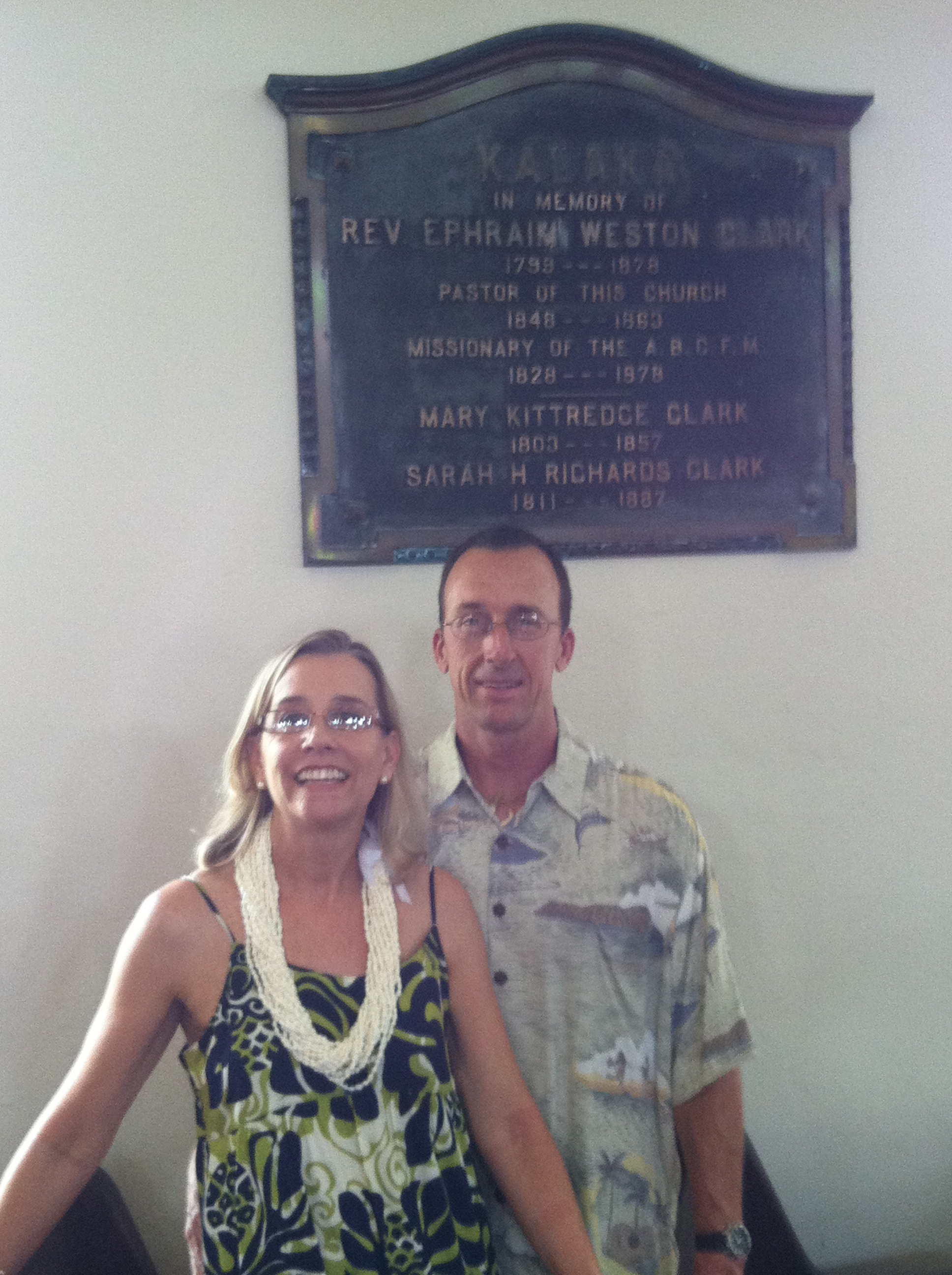
Later on another layer of meaning was added when I discovered that my children’s great-great-great-great grandfather had pastored the church in the mid-nineteenth century. And their great-great-great-great grandmother is buried out back in the church cemetery.

With the plaque inside the church, commemorating The Coach’s ancestor’s service as pastor

Also, as a history buff, I get a little thrill knowing I am sitting in the same place where Hawaiian royalty worshiped so many years ago.

Kawaiaha`o is not our home church, but we still do worship there from time to time, because of the family connection and also the current kahu [pastor] is a friend. And, because it’s just such a lovely and affecting way to spend a Sabbath morning.

This is the fourteenth post in my series, 31 Days of Life in my Hawaii. Click here to get the links to the other posts in the series.